Los Angeles, CA (March 26, 2024) – Green Econome is proud to announce that it has received the 2024 ENERGY STAR Partner of the Year Award from the U.S. Environmental Protection Agency for a second consecutive year.

Green Econome Founder and CEO, Marika Erdely reflects on the meaning of this award, “I am incredibly proud to be an ENERGY STAR Partner of the Year, two years in a row. Since founding this company in 2009 from scratch, to being acknowledged by the EPA for the quality work we do, I am very appreciative of the hard work and integrity of our team, and our clients who entrust us with their business. We have achieved this recognition together.”

Each year, the ENERGY STAR program honors a select group of businesses and organizations that have made outstanding contributions to energy efficiency and the transition to a clean energy economy. ENERGY STAR award winners lead their industries in the production, sale, and adoption of energy-efficient products, homes, buildings, services, and strategies. These efforts have saved more than five trillion kilowatt-hours of electricity over the past 30 years. In 2023, Green Econome benchmarked over 1,200 buildings, with 9 buildings earning their first-ever ENERGY STAR certification. Through ENERGY STAR® Portfolio Manager® web services, Green Econome introduced custom analytics and client reports in 2023, and is developing a client dashboard, further customizing how clients can view and interact with their building data.

“President Biden’s Investing in America agenda creates unprecedented opportunity to build a clean energy economy, and private sector partners through programs like ENERGY STAR are leading the way,” said EPA Administrator Michael S. Regan. “I congratulate this year’s ENERGY STAR award winners for their innovation and leadership, in delivering cost-effective energy-efficient solutions that create jobs, address climate change, and contribute to a healthier environment for all.”

Winners are selected from a network of thousands of ENERGY STAR partners. For a complete list of 2024 winners and more information about ENERGY STAR’s awards program, visit energystar.gov/awardwinners.

About Green Econome

Green Econome is a woman-owned small business in the dynamic intersection of sustainability and commercial real estate, providing energy and water efficiency compliance, consulting, and construction services nationwide. Our integrated team has over 20 years of combined experience finding energy-efficient solutions that positively affect market valuations, reduce environmental impact, meet ESG and sustainability goals, and ensure regulatory compliance.

About ENERGY STAR

ENERGY STAR® is the government-backed symbol for energy efficiency, providing simple, credible, and unbiased information that consumers and businesses rely on to make well-informed decisions. Since 1992, ENERGY STAR and its partners helped American families and businesses avoid more than $500 billion in energy costs and achieve more than 4 billion metric tons of greenhouse gas reductions. More background information about ENERGY STAR’s impacts can be found at www.energystar.gov/impacts.

Media Contact:

Karalyn Honea
karalyn@greeneconome.com
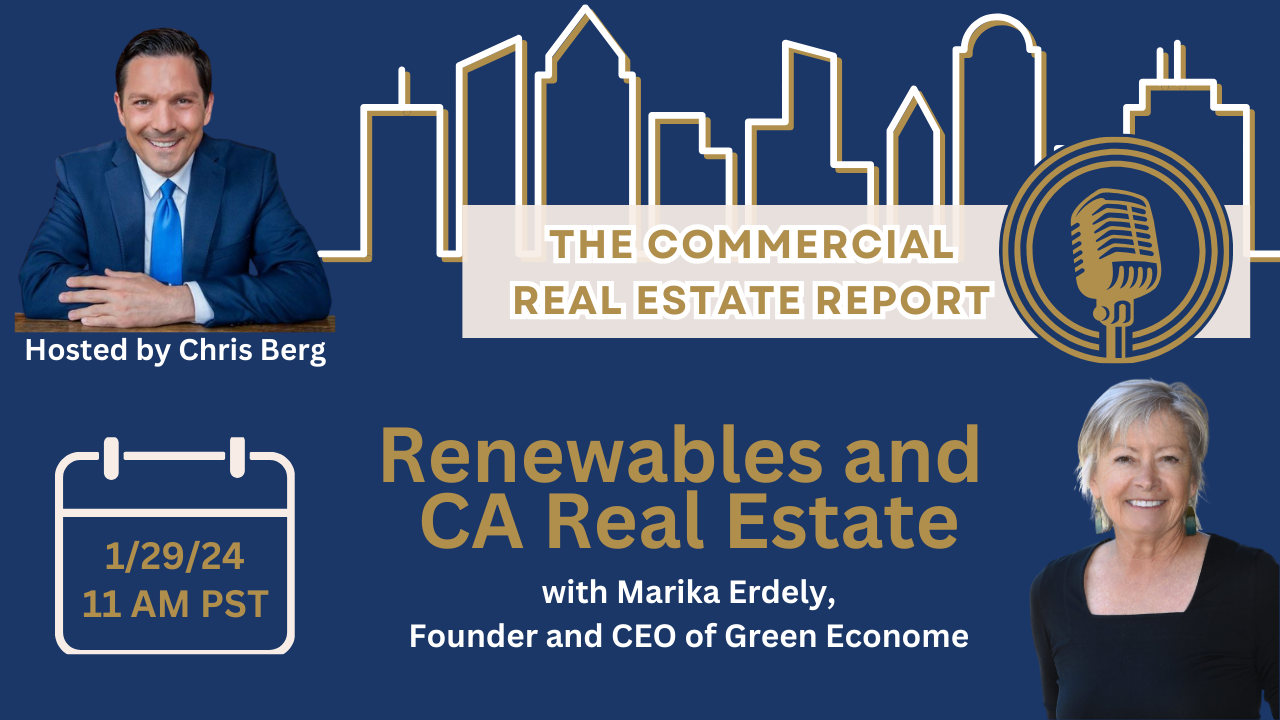
In this episode of The Commercial Real Estate Report podcast, Chris Berg of Abernathey Holdings and Green Econome Founder and CEO, Marika Erdely take a deep dive into:

  • Solar and clean energy requirements in CA
  • The positive impacts of ESG
  • Challenges facing CRE and building performance
  • Financial incentives and the tax benefits of the Inflation Reduction Act

The Commercial Real Estate Report is dedicated to bringing you in-depth analyses, market trends, and expert opinions from the world of commercial real estate. Whether you’re an investor, a developer, or simply someone interested in the dynamics of commercial properties, they’ve got you covered. Find them on YouTube @TheCommercialRealEstate. Listen, share, subscribe.

CREW Orange County and Green Econome present Connections 2024 Outlook Lunch and Learn

Please join us on Wednesday, January 10, 2024, for lunch, learning, and networking at Tangram Interiors‘ beautiful space in Newport Beach. Green Econome CEO, Marika Erdely will be discussing:

  • What you need to know about energy and water disclosure laws for existing buildings.
  • Critical insight into ESG and its impact on commercial real estate.
  • Available utility incentives and tax benefits of the Inflation Reduction Act for new development, renovations, and efficiency upgrades.

Space is limited. Registration is required and closes on January 9, 2024 at noon. We hope to see you there!

CREW Connections 2024 Outlook Lunch and Learn

Wednesday, January 10th
12:00 pm – 1:00 pm

Tangram Interiors
1375 Dove Street, Suite 300
Newport Beach, CA 92660

During National Clean Energy Action Month, take steps toward climate action for your commercial real estate.

Since our inception, the U.S. EPA’s ENERGY STAR® programs have been at the core of Green Econome’s services to help our customers save energy, save money, and protect the planet. As a commercial real estate owner or manager, you have the power to make a positive impact on the environment and your bottom line. October is National Clean Energy Action Month, a perfect time to take action and implement energy-efficient practices in your buildings. One of the best ways to start is through ENERGY STAR benchmarking and certification.

ENERGY STAR is a program by the U.S. Environmental Protection Agency (EPA) that helps businesses and individuals save money and protect the environment by promoting energy-efficient products and practices. Through benchmarking, you can compare your building’s energy performance to similar buildings and identify areas for improvement. Certification, on the other hand, recognizes buildings that meet strict energy efficiency standards and have lower energy costs and greenhouse gas (GHG) emissions. By using ENERGY STAR benchmarking and certification, you can reap numerous benefits for your buildings and your business.

Top 5 Reasons for Clean Energy Action

Comply with Local and State Energy Benchmarking and Building Performance Policy

Cities and states nationwide are adopting climate action plans, which in many cases include annual ENERGY STAR benchmarking to track energy and water use and building performance standards to reduce GHG emissions across their existing building stock. Often ENERGY STAR certification is an exemption from having to perform costly audits, retro-commissioning, and efficiency improvements.

Lower Energy Costs

Energy-efficient buildings consume less energy and therefore have lower energy bills. According to ENERGY STAR, certified buildings use 35% less energy and emit 35% less carbon dioxide than typical buildings. By benchmarking your building’s energy performance, you can identify ways to reduce energy waste and save money in the long run.

Higher Property Value

ENERGY STAR certification is a badge of honor that can increase your building’s value and appeal to potential tenants or buyers. Certified buildings are more attractive to environmentally conscious tenants who prefer to work or live in sustainable spaces. Moreover, building certifications are being used as ESG targets and requirements by tenant companies, REITs, and investment firms.

Improved Indoor Comfort

Energy-efficient buildings are not only good for the environment and your wallet, but also for the health and comfort of occupants. By reducing energy waste, you can improve indoor air quality, reduce noise levels, and enhance thermal comfort. This can result in higher productivity, better health outcomes, and happier occupants.

Positive Public Relations

Implementing energy-efficient practices and achieving ENERGY STAR certification can improve your business’s public image and reputation. You can promote your achievements to your stakeholders, customers, and the media, and showcase your commitment to sustainability and energy conservation.

Join us this month in celebrating the progress made, and more importantly, taking steps to further the clean energy transition needed to sustain our future. Take a moment, gather your team, and discuss with purpose what changes and goals you can commit to in 2024 and beyond. When you have the vision, take action. Call (424) 422-9696 or Contact Us. Talk to you soon!

About Green Econome

Green Econome is a woman-owned, small business providing energy and water efficiency compliance, consulting, and construction services for commercial real estate. Our Los Angeles-based team of licensed and credentialed professionals takes an integrated approach to finding efficiency solutions that positively affect market valuations, reduce environmental impact, meet ESG and sustainability goals, and ensure regulatory compliance.

Santa Monica, CA (March 28, 2023)—Green Econome is proud to announce that it has received the 2023 ENERGY STAR Partner of the Year Award from the U.S. Environmental Protection Agency and the U.S. Department of Energy.

Marika Erdely, Founder and CEO of Green Econome states, “Receiving this recognition for our partnership with the EPA and ENERGY STAR program is a significant milestone for our organization. Green Econome was founded to meet the demand for ENERGY STAR benchmarking as local and state energy disclosure laws were put into place over a decade ago. Green Econome is celebrating ten years of compliance services, so earning 2023 Partner of the Year is that much sweeter. We have benchmarked nearly 2,000 properties and pride ourselves on being a leader in accurate reporting and industry expertise. We wholeheartedly invest in ENERGY STAR as a trusted platform that we lean into for benchmarking, building certifications, and now GHG emissions metrics, data management for our client’s ESG goals, and driving reduction targets.”

“As we accelerate historic efforts to address climate change, public-private partnerships will be essential to realizing the scale of our ambition,” said EPA Administrator Michael S. Regan. “I applaud this year’s ENERGY STAR award winners for working with EPA to deliver a clean energy future that saves American consumers and businesses money and creates jobs.”

Each year, the ENERGY STAR program honors a select group of businesses and organizations that have made outstanding contributions to the transition to a clean energy economy. ENERGY STAR award winners lead their industries in the production, sale, and adoption of energy-efficient products, homes, buildings, services, and strategies. These efforts are essential to fighting the climate crisis, protecting public health, and creating a clean energy future for everyone.

Winners are selected from a network of thousands of ENERGY STAR partners. Visit Green Econome’s profile page, or for a complete list of 2023 winners and more information about ENERGY STAR’s awards program, visit energystar.gov/awardwinners.

About Green Econome

Green Econome is a woman-owned, small business providing energy and water efficiency compliance, consulting, and construction services for commercial real estate. Our Los Angeles-based team of licensed and credentialed professionals takes an integrated approach to finding efficiency solutions that positively affect market valuations, reduce environmental impact, meet ESG and sustainability goals, and ensure regulatory compliance.

About ENERGY STAR

ENERGY STAR® is the government-backed symbol for energy efficiency, providing simple, credible, and unbiased information that consumers and businesses rely on to make well-informed decisions. Thousands of industrial, commercial, utility, state, and local organizations rely on their partnership with the U.S. Environmental Protection Agency (EPA) to deliver cost-saving energy efficiency solutions. Since 1992, ENERGY STAR and its partners helped American families and businesses avoid more than $500 billion in energy costs and achieve more than 4 billion metric tons of greenhouse gas reductions. More background information about ENERGY STAR’s impacts can be found at www.energystar.gov/impacts.

Media Contact:

Karalyn Honea
karalyn@greeneconome.com

UPDATE: The Tolling of Existing Buildings Energy and Water Efficiency (EBEWE) Program Deadlines Has Ended. The New ‘Reissued’ Deadline is September 7, 2023.

We, as a city and wider community, reached a milestone at the end of February with the rescinding of the City of Los Angeles COVID-19 Emergency Order. Included in the Executive Directive is the termination of ‘tolling of Existing Buildings Energy and Water Efficiency (EBEWE) deadlines. In short, you have to comply with EBEWE on-time this year and submit previous non-compliance by September 7, 2023.

Top 3 Takeaways For Tolled Deadline Compliance

  • The tolling (suspension) of EBEWE deadlines will end on February 28, 2023.
  • LA Department of Building and Safety (LADBS) sent a “reissued” Notice to Comply for any building not in compliance for impacted years on March 7, 2023.
  • You will have six (6) months from the notice issue date to submit compliance to LADBS. This means benchmarking and Phase II A/RCx compliance for any affected building must comply by September 7, 2023.

Top 3 Tips for EBEWE Compliance

  • If your building needs EBEWE benchmarking compliance this year, and for previous years, Green Econome can benchmark and submit compliance for all years, bringing you up to date by the annual June 1st deadline.
  • If your building requires EBEWE Audit & Retro-Commissioning (A/RCx) for compliance years 2021 or 2022, we recommend starting now. If your building doesn’t meet an exemption and needs an ASHRAE Level II audit, allow a minimum of 3 months to comply.
  • Contact us with questions, or to get started on your EBEWE compliance. We are happy to help!
ORIGINAL STORY

The City’s COVID-19 Public Emergency Order Impacts EBEWE Deadlines, While the Program Moves Forward

Good News! In the email titled, “UPDATE REGARDING TOLLING OF EXISTING BUILDINGS ENERGY AND WATER EFFICIENCY (EBEWE) COMPLIANCE DATES” sent on Monday, October 24, 2022, by the Los Angeles Department of Building & Safety (LADBS), they announced that the deadline for EBEWE Phase II Audit / Retro-commissioning (A/RCx) requirements has been “tolled”, or delayed, yet again due to the City of Los Angeles Public Emergency Order (COVID-19), which is still in effect.

What Does This Mean? Three Facts You Need To Know About EBEWE Delays

  1. The December 1, 2022, deadline for buildings due to comply (LADBS Building ID ending with 2 or 3), has been delayed and late compliance will not be fined. This is an update to the already tolled deadlines for Phase I benchmarking program years 2019, 2020, and 2021, AND Phase II A/RCx compliance year 2021.
  2. Although the due dates have been paused while the emergency order is in effect, the program itself has not been paused. The city is encouraging all owners of covered buildings to submit data to continue developing energy and water efficiency programs.
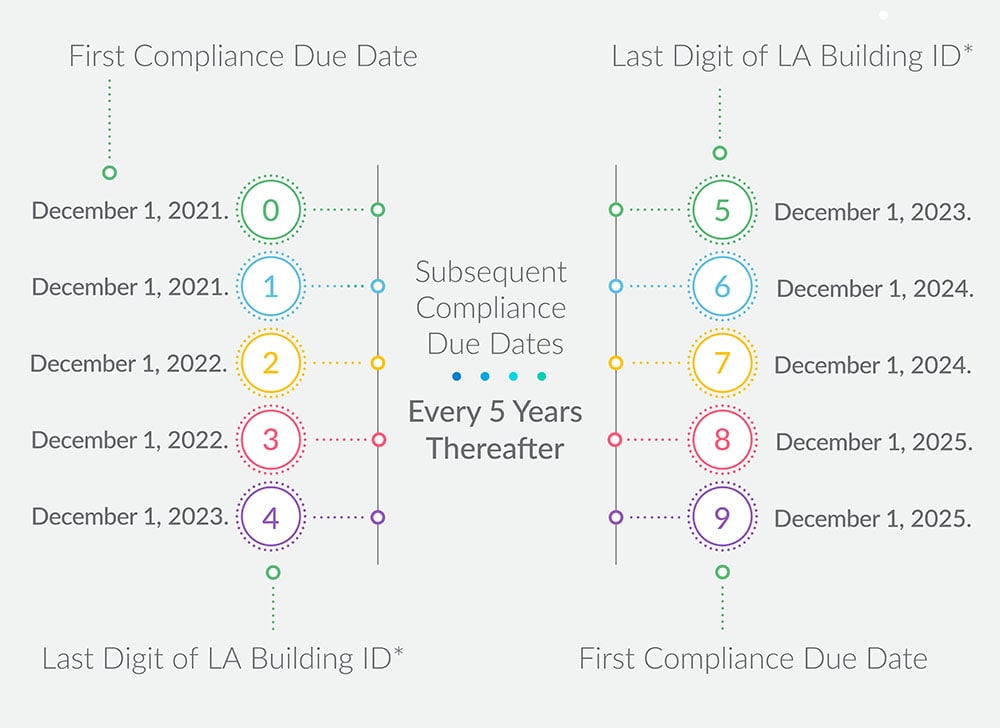
  3. Tolling of Phase II A/RCx deadlines does not change your 5-year compliance timeframe. See the schedule below. This is particularly important for buildings seeking ENERGY STAR® Certification. Certification is independent of LADBS and adheres to the EPA’s application window, which is open until 12/9/22. You cannot submit for Certification of previous years.

What Does This Mean for My Building? Action Items for Compliance

It means that you’ve bought some time; and ultimately, your building should be both in compliance with annual benchmarking and the 5-year A/RCx requirements.

  • For Green Econome clients, we are moving forward as though the deadlines are in place and doing everything in our power to fulfill your compliance on time.
  • If you have let any of your reporting lapse, Green Econome can bring you up to date. We offer multi-year contracts with discounted pricing on retroactive benchmarking.
  • If you have not started Phase II A/RCx for your building(s), please reach out to us ASAP for proposals. Full ASHRAE audits can take 2-3 months to complete. Additionally, ASHRAE audits are costly, and not always necessary if exemptions can be met. We determine your least-cost route to compliance, based on your (accurate) benchmarking data.

Deadlines may wait, but the climate crisis won’t. Nor will the Climate Action Plans and transition to clean energy that the city, county, and state are drafting. Your ENERGY STAR® benchmarking and building performance data directly informs our local policy. Please participate.

The full notice can be viewed and downloaded here. If you have more questions regarding this program in general, view our Q&A presentation, and contact us at any time to discuss your buildings further.

ORIGINAL: The City’s COVID-19 Public Emergency Order Impacts EBEWE Deadlines, While the Program Moves Forward

Good News! In the email titled, “UPDATE REGARDING TOLLING OF EXISTING BUILDINGS ENERGY AND WATER EFFICIENCY (EBEWE) COMPLIANCE DATES” sent on Monday, October 24, 2022, by the Los Angeles Department of Building & Safety (LADBS), they announced that the deadline for EBEWE Phase II Audit / Retro-commissioning (A/RCx) requirements has been “tolled”, or delayed, yet again due to the City of Los Angeles Public Emergency Order (COVID-19), which is still in effect.

What Does This Mean? Three Facts You Need To Know About EBEWE Delays

  1. The December 1, 2022, deadline for buildings due to comply (LADBS Building ID ending with 2 or 3), has been delayed and late compliance will not be fined. This is an update to the already tolled deadlines for Phase I benchmarking program years 2019, 2020, and 2021, AND Phase II A/RCx compliance year 2021.
  2. Although the due dates have been paused while the emergency order is in effect, the program itself has not been paused. The city is encouraging all owners of covered buildings to submit data to continue developing energy and water efficiency programs.
  3. Tolling of Phase II A/RCx deadlines does not change your 5-year compliance timeframe. See the schedule below. This is particularly important for buildings seeking ENERGY STAR® Certification. Certification is independent of LADBS and adheres to the EPA’s application window, which is open until 12/9/22. You cannot submit for Certification of previous years.

What Does This Mean for My Building? Action Items for Compliance

It means that you’ve bought some time; and ultimately, your building should be both in compliance with annual benchmarking and the 5-year A/RCx requirements.

  • For Green Econome clients, we are moving forward as though the deadlines are in place and doing everything in our power to fulfill your compliance on time.
  • If you have let any of your reporting lapse, Green Econome can bring you up to date. We offer multi-year contracts with discounted pricing on retroactive benchmarking.
  • If you have not started Phase II A/RCx for your building(s), please reach out to us ASAP for proposals. Full ASHRAE audits can take 2-3 months to complete. Additionally, ASHRAE audits are costly, and not always necessary if exemptions can be met. We determine your least-cost route to compliance, based on your (accurate) benchmarking data.

Deadlines may wait, but the climate crisis won’t. Nor will the Climate Action Plans and transition to clean energy that the city, county, and state are drafting. Your ENERGY STAR® benchmarking and building performance data directly informs our local policy. Please participate.

The full notice can be viewed and downloaded here. If you have more questions regarding this program in general, view our Q&A presentation, and contact us at any time to discuss your buildings further.

ORIGINAL: The City’s COVID-19 Public Emergency Order Impacts EBEWE Deadlines, While the Program Moves Forward

Good News! In the email titled, “UPDATE REGARDING TOLLING OF EXISTING BUILDINGS ENERGY AND WATER EFFICIENCY (EBEWE) COMPLIANCE DATES” sent on Monday, October 24, 2022, by the Los Angeles Department of Building & Safety (LADBS), they announced that the deadline for EBEWE Phase II Audit / Retro-commissioning (A/RCx) requirements has been “tolled”, or delayed, yet again due to the City of Los Angeles Public Emergency Order (COVID-19), which is still in effect.

What Does This Mean? Three Facts You Need To Know About EBEWE Delays

  1. The December 1, 2022, deadline for buildings due to comply (LADBS Building ID ending with 2 or 3), has been delayed and late compliance will not be fined. This is an update to the already tolled deadlines for Phase I benchmarking program years 2019, 2020, and 2021, AND Phase II A/RCx compliance year 2021.
  2. Although the due dates have been paused while the emergency order is in effect, the program itself has not been paused. The city is encouraging all owners of covered buildings to submit data to continue developing energy and water efficiency programs.
  3. Tolling of Phase II A/RCx deadlines does not change your 5-year compliance timeframe. See the schedule below. This is particularly important for buildings seeking ENERGY STAR® Certification. Certification is independent of LADBS and adheres to the EPA’s application window, which is open until 12/9/22. You cannot submit for Certification of previous years.

What Does This Mean for My Building? Action Items for Compliance

It means that you’ve bought some time; and ultimately, your building should be both in compliance with annual benchmarking and the 5-year A/RCx requirements.

  • For Green Econome clients, we are moving forward as though the deadlines are in place and doing everything in our power to fulfill your compliance on time.
  • If you have let any of your reporting lapse, Green Econome can bring you up to date. We offer multi-year contracts with discounted pricing on retroactive benchmarking.
  • If you have not started Phase II A/RCx for your building(s), please reach out to us ASAP for proposals. Full ASHRAE audits can take 2-3 months to complete. Additionally, ASHRAE audits are costly, and not always necessary if exemptions can be met. We determine your least-cost route to compliance, based on your (accurate) benchmarking data.

Deadlines may wait, but the climate crisis won’t. Nor will the Climate Action Plans and transition to clean energy that the city, county, and state are drafting. Your ENERGY STAR® benchmarking and building performance data directly informs our local policy. Please participate.

The full notice can be viewed and downloaded here. If you have more questions regarding this program in general, view our Q&A presentation, and contact us at any time to discuss your buildings further.

The latest focus in sustainable commercial real estate is on “Environmental, Social, and Governance,” also known as ESG. ESG has received attention from regulators and investors, and, according to a recent report from Deloitte,  “sustainability has become a strategic imperative across industries”. Real estate professionals need to begin focusing on how ESG can impact portfolios and policy. Let’s identify:

  1. What is ESG and how will it affect commercial real estate?
  2. How will the Inflation Reduction Act benefit my real estate portfolio?

Here is a simple table identifying some of the elements of ESG:

Setting the Standard: The SEC Proposed Ruling

Soon, public companies will need to report on the three ESG categories, also known as an ESG Strategy, to their investors. The SEC’s proposed Rule on Climate Disclosure gives companies a roadmap for ESG reporting and requires disclosures related to climate-related risks that could have an impact on their businesses, whether it’s their day-to-day operations or a financial impact on their real estate assets.

The SEC proposed reporting will be part of the public corporation’s quarterly and annual disclosures and will detail the company’s carbon footprint and include reporting on greenhouse gas emissions from real estate and the climate-related risks to those assets. At NAREIT’s ESG conference I attended this fall, several panelists suggested that insurance companies and banking institutions will be considering climate disclosures in their financial metrics. Additionally, it was mentioned that investors from the European Union would also be looking at ESG disclosures when considering investments in the U.S. Most public companies have been focusing on their ESG strategies, and the process of gathering data for this year’s ESG disclosures is already underway.

Privately-Held Companies and Building Owners Can Benefit

What about private companies, and the private commercial real estate owners that lease to space public companies? Private owners should also focus on having an energy-efficient property and should not ignore the trend toward ESG.

The “E” in the ESG framework stands for “environmental,” which refers in part, to real estate and the efficiency of buildings. All buildings emit carbon emissions, and these emissions (in the forms of kWh and therms) can be broken down into three kinds: Scopes 1, 2, and 3.

  • Scope 1: Direct emissions that stem from sources that are owned, or controlled by the organization, such as company vehicles and the fuel they burn, process emissions from industrial activities, leaks from refrigeration, etc.
  • Scope 2: Indirect emissions that arise from the generation of purchased electricity, heating, cooling, and steam (Any utility bill creates emissions such as electricity or gas used by the building)
  • Scope 3: Other indirect emissions that are directly from the supply chain of goods and services that the public company purchases. (This is the largest scope and most complicated coming from the organization’s operations, purchasing and selling goods, such as leased assets, business travel, and employee commuting)

Initially, Scope 1 and 2 emissions will be required to be disclosed by the SEC. However, public companies will soon be mandated to report Scope 3 emissions as well.

Mandated reporting means that if you have a tenant in one of your buildings that is providing products to a public company, the tenant will soon have to be reporting on their building’s emissions and activities. There will then be an effort to reduce those emissions, even if your building is not operated by a public company.

How Do You Measure Your Property’s Emissions?

As with anything new, standards and protocols are being established, along with a host of innovative technologies to harness data. As a trusted platform, Green Econome utilizes ENERGY STAR® Portfolio Manager, which gives owners data that can be used to calculate the property’s total emissions. The EPA is actively developing the platform further, to better meet the demands of GHG accounting and scope emissions reporting.

Green Econome takes a systematic approach to ESG, along with a team of advisors, we measure, identify opportunities, implement, and analyze results to ensure you are on target to achieve your environmental goals. If building certification is part of your strategy, we can fulfill those as well.

Inflation Reduction Act: Tax Strategies and Incentives for Property Owners

There’s good news! There are many financial benefits from the new Inflation Reduction Act of 2022 (IRA) to commercial property owners and developers.

Personally, I like the investment tax credit (ITC) known as the federal solar tax credit and the fact that it is now back up from 26% to 30% of the total project cost through 2033. Currently, our solar pv projects are benefiting from 58% of the project cost being covered by this tax credit and federal and state depreciation deductions.

Section 179 (a tax deduction) of the IRA provides owners with a dollar amount per square foot if the commercial or residential building meets a certain efficiency standard. Owners can earn $5 per sq. ft. for new construction or retrofitting a building, depending on its resulting energy efficiency. It is a laddered benefit ranging from $2.50 sq. ft. for a 25% reduction in energy usage up to a maximum of $5.00 sq. ft. for 50% or more.

For multifamily landlords, Section 45L (a tax credit) allows up to $5,000 per unit (single-family or apartment) if the building meets certain energy efficiency criteria.

What’s In It For Commercial Real Estate?

Energy-efficient buildings will be worth more and will be more attractive for public companies concerned about emissions. Soon, everyone will be thinking about ENERGY STAR Benchmarking —a viable tool to produce data for reporting on your building’s performance.

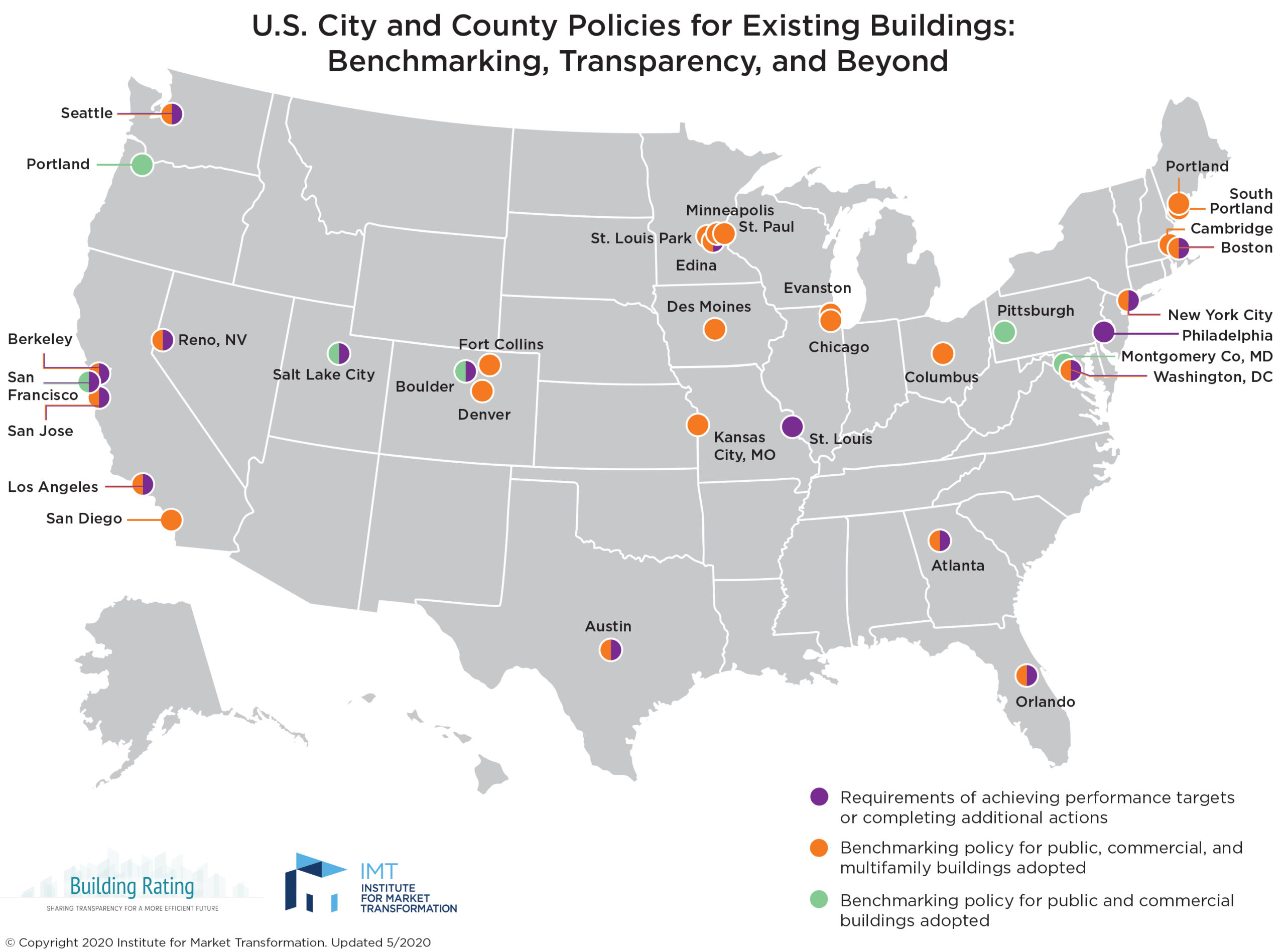
ENERGY STAR Benchmarking is already widely used for energy and water disclosure laws across the county (and Canada). You can view IMT’s national map of programs currently in place.

As an expert in reducing commercial property emissions, I anticipate a big push to move real estate into the world of ESG reporting, which goes a long way toward environmental sustainability. Once the SEC finalizes its ruling, all public companies will be required to focus on the “E” on their buildings like never before. Additionally, I believe that when companies also consider the “S” for Social and “G” for Governance, they will ultimately be better stewards of the planet.

If you need an expert to understand your building’s energy or water efficiency and emissions, please reach out to me at Marika@greeneconome.com. At Green Econome, a team of professionals is ready to help you meet your ESG requirements, save operating costs, and increase the value of your property.

Marika Erdely Headshot

Marika Erdely, MBA, LEED AP+C, Certified Energy Auditor, Fitwel Ambassador
MarikaE@GreenEconome.com
(818) 681-5750

Marika is an expert in energy and water efficiency and is the Founder and CEO of Green Econome, an energy consulting and construction company located in Santa Monica, CA. Marika has over 30 years of professional financial experience and approaches sustainability through an economic lens.

Green Econome’s CEO, Marika Erdely, sat down with CREtech Climate Podcast host, Michael Beckerman, to share insights on:

  • Steering the Commercial Real Estate industry to reduce the carbon emissions of existing buildings.
  • Challenges and solutions to sourcing funding for climate change investments.

The CREtech Climate Cast is a podcast series devoted to educating, inspiring, and leading the built environment to address the world’s biggest crisis – climate change. Tune in to in-depth conversations with the leading real estate and tech innovators from across the globe with CREtech Climate CEO, Michael Beckerman.

Los Angeles Existing Buildings Energy and Water Efficiency Ordinance (EBEWE): Phase II – What to Expect

If your building is a covered building and ≥20,000 sq. ft. (a.k.a. needs to comply with EBEWE), then you should have a few years of ENERGY STAR benchmarking under your belt. If not, stop reading and call us immediately at (424) 422–9696! In addition to your annual benchmarking, every five years you are required to show that you have either maintained a high-performing building or are taking steps to become one. Our job is to keep you informed, efficient and in compliance. Your job, when it comes to Phase II, is to make sure you have an efficiency budget in place and enough time to comply by your unique due date.

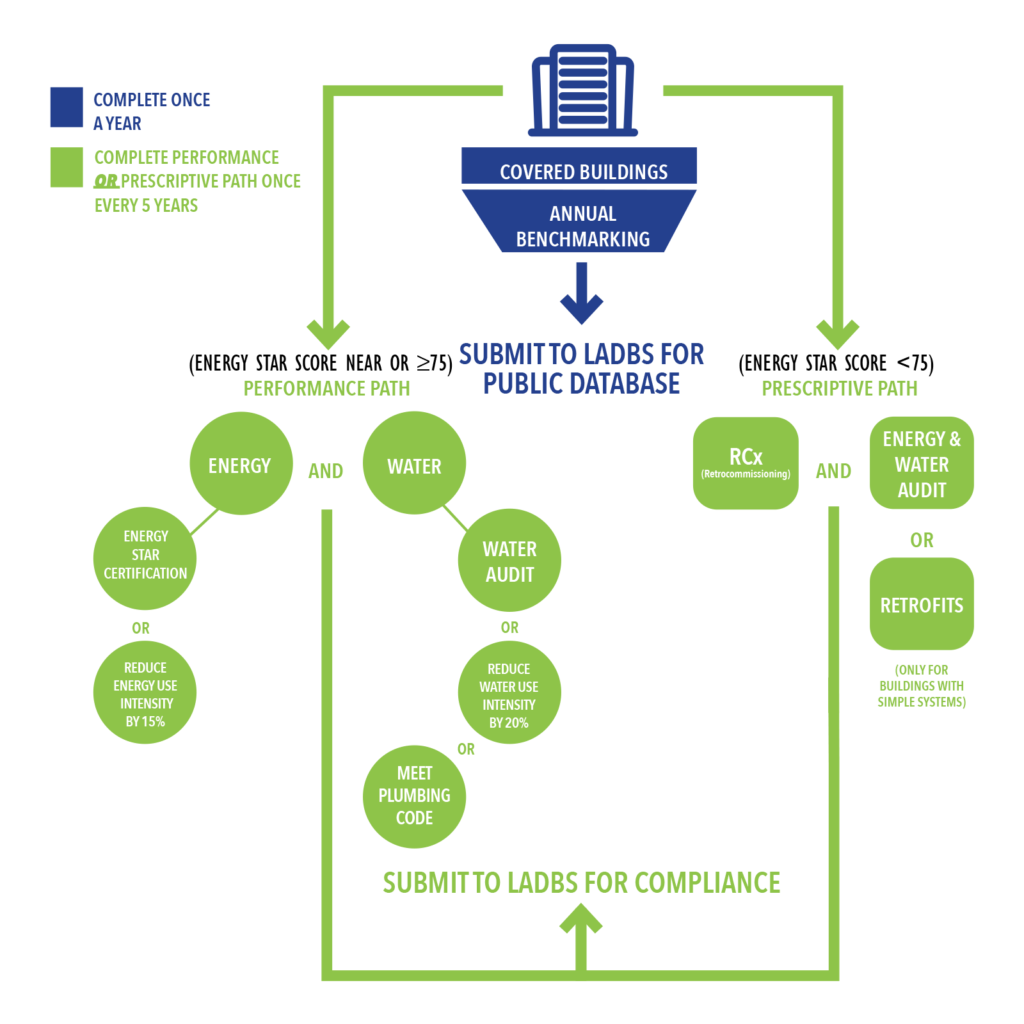
Below, we’ve outlined the program and Phase II compliance. We’ve also included an infographic for you visual learners, and some tips to comply:

EBEWE Program Summary

Local Policy: Los Angeles’ Green New Deal

Phase I Benchmarking Report: Due by June 1, annually

Phase II Performance Report: Due by December 1, every five-years based on the last digit of your LADBS Building ID

Program Fees: LADBS registration fee + surcharge for benchmarking is $66.41 / building / year, and $183 per audit/RCx confirmation submittal (subject to change)

The EBEWE Phase II Requirements

For Phase II, Building owners must either complete an ASHRAE Level II audit and retro-commissioning (RCx) OR meet one of the exemptions noted below before their compliance due date, which is determined by the last digit of the building’s LADBS Building ID.

https://www.betterbuildingsla.com/_images/content/EBEWE_Ordinance_Brochure.pdf

Prescriptive Path

a) ASHRAE Level II Audit
The in-depth identification and documentation of a building’s energy and water-use equipment. Audits examine existing conditions to pinpoint potential areas of improvement for energy and water efficiency. Must meet or exceed ASHRAE Level II standards.

b) Retro-commissioning (RCx)
RCx is the re-tuning and maintenance of existing systems (energy and water). Your ASHRAE Level II audit will list recommended RCx measures. It will be important to have an implementation plan and budget in place prior to your due date.

Performance Path

Buildings that do not have to go through an Energy Audit and Retro-commissioning qualify for one of the following exemptions:

  1. ENERGY STAR Certification: The building has received this certification from the EPA for the year of the building’s compliance due date, or 2 of the 3 years prior.
  2. For buildings not eligible to receive an ENERGY STAR score, the building must perform 25% better than the national median of similar building types. This data is available through your benchmarking reporting.
  3. The building has reduced its Source Energy Use Intensity (EUI) by 15% when compared to the five years before a building’s compliance due date.
  4. Buildings that do not have a central cooling system must retrofit four of six prescribed energy efficiency measures noted in the EBEWE guidelines (available upon request).

Water Exemption to the Audit and Retro-commissioning:

Buildings that meet one of the below exemptions do not have to go through a Water Audit and RCx:

  1. The building has reduced its water use intensity by at least 20% when compared to the five years prior to the building’s compliance due date.
  2. Buildings that do not have a central cooling system must retrofit two of three prescribed water efficiency measures noted in the EBEWE guidelines (available upon request).
  3. The building’s water use conforms to the LA Municipal and Title 24 Code in effect at any time during the five-year compliance cycle.
  4. The building is new and has been occupied for less than five years from its occupancy date based on the Temporary or final Certificate of Occupancy.

*All exemptions must be certified by, or performed under the supervision of, a California licensed architect or engineer.

Know the Facts: Compliance Tips

  • Don’t be fooled into believing your building MUST receive an audit to comply. Not all buildings need to be audited. The price of an ASHRAE Level II audit can be significantly higher than available exemptions, so make sure you are being advised on the most efficient and cost-effective Phase II path to compliance for your building(s).
  • Performance metrics rely on twelve months of actual energy usage and information about the operations and physical characteristics of the building’s type and use. If this information is estimated or defaulted in your benchmarking report, the metrics will not be correct. Make sure your building has been accurately benchmarked.
  • As you see, this isn’t something that can be done quickly, or for free. If you need more information on creating a budget or financing options, call us.
  • Cities throughout the state (and country for that matter), also have local energy efficiency policy. If you have buildings outside of LA, make sure you are in compliance by checking our 2021 Guide.

As part of Green EconoME’s compliance services, we offer a consultation on the report’s results, which includes an explanation and recommendations for energy efficiency improvements and how to meet EBEWE Phase II compliance. We will always make recommendations in the best interest of your building, budget and efficiency priorities.

Contact Green EconoME to meet your compliance requirements.

California’s energy efficiency action plan for existing buildings is ramping up in 2021. We are offering this guide to help identify what your city’s climate policy is and what the requirements are for existing commercial and residential buildings. Included are some tips for making the most of your efficiency compliance.

Why Existing Buildings?

Existing buildings are the second-largest source of GHG emissions in California. Identifying energy and water waste in our buildings provides valuable insight for policymakers. The chosen method of identifying is through local and state-mandated Energy Benchmarking and Performance Reporting. Benchmarking is the comparison of a site’s energy performance to similar type and use buildings over a specified period of time. ENERGY STAR Portfolio Manager is the approved tool used to complete and submit benchmarking reports for compliance. Here are a few overall notes on meeting energy disclosure requirements:

  • The owner of the building is the responsible party 
  • These benchmarking laws are required annually
  • “Covered or disclosable buildings” are the building types that need to comply. Exceptions exist and vary per ordinance so be sure to check with your individual city’s program or contact us for program requirements 
  • When you comply with your local benchmarking ordinances, the city shares the data with the state, placing you in AB 802 compliance as well
  • Benchmarking provides insight into how efficient or inefficient your building is operating. Efficient buildings provide for lower operating costs and higher market valuations
  • Funding: there are available rebates and incentives through your utilities and in some places, local funding for compliance and energy efficiency projects. Most ordinance pages have links to these programs. Also check your electric, gas, and water company webpages for info, or contact us
  • The State of California and the City of San Diego only require annual energy disclosure. However, some cities also require buildings to become energy efficient or show their performance by meeting Energy Star Certification requirements

5 Tips for Compliance & Becoming a High-Performing Building

  1. Hire Green EconoME to complete your compliance and energy efficiency consulting. We understand that you have benchmarking service provider options; however, from our experience benchmarking over 1,600 buildings properly, not all benchmarking is the same. We place emphasis on accurately measuring your data, rather than meeting the bare minimum for compliance. It is not only the legal thing to do, it is also more economic in the long run. The data in your benchmarking report is valuable to the operation and investment of your property, and the basis of your performance reporting. If corners are cut, you may end up paying more in unnecessary (and costly) audits or having to rehire another firm to correct the work. 
  2. Add tenant authorization to your lease to release energy and water use data from the utilities. In some cases where the tenants are the electric/gas/water account holder, they are required to sign an authorization to share their usage data. As you can imagine, this is time consuming and not always successful. In lieu of the authorization, we can submit a copy of the lease if it includes authorization language. 
  3. Create an energy efficiency budget. The Better Buildings Financing Navigator is a great resource which outlines common barriers, solutions and considerations to energy financing. These ordinances are all-for-none if building owners and operators do not invest in the goal of achieving more energy and water efficient buildings by 2030. Visit our case studies for examples of the cost to savings you can achieve through efficiency projects.
  4. Leverage available rebates and incentives. In addition to outside funding and loans, there are robust programs for energy efficiency and clean power through utilities, local and federal government. Word on the street is that further funding (and further policy) will be proposed soon after the new administration takes office. Green EconoME calculates available rebates & incentives savings into our estimates and/or audit reports.
  5. Put your data to work. Use monthly data to track your energy & water use in ENERGY STAR Portfolio Manager. Demonstrating energy and water reductions through the benchmarking tool in some cities is a path to performance compliance. Either way, you now have a powerful tool that tracks your ongoing use, so take advantage of it. Green EconoME offers consultations to assess your building’s performance and identify problem areas or opportunities for savings.

Our hope is that the purpose of the requirements is clear and can inspire long term efficiency in your buildings. Our city and state leadership also recognize this can come as a big ask, and so they are supporting owners and communities through funding programs. Take advantage of them. Most importantly, existing buildings are recognized across the globe as a vital part of the solution. That is a big opportunity when you throw your hat in the ring. Good luck and call us if you need us. We cannot wait to see what California buildings can do.

Benchmarking Only
Benchmarking and Performance Reporting

Statewide Program

State Policy: Clean Energy and Pollution Reduction Act – SB 350

Benchmarking Report: Due by June 1, annually

Performance Report: N/A

Fees: N/A

Program Summary: Commercial buildings with more than 50,000 sq. ft. and no residential utility accounts, and multifamily residential buildings with more than 50,000 sq. ft. and 17 or more utility accounts must submit whole-building energy benchmarking reports annually.

Enforcement: Per Public Resource Code #25321, the California Energy Commission is able to enforce this law. This code states:¨If after five working days, the owner does not comply, the owner will be subject to a civil penalty (after a hearing that complies with constitutional requirements. Civil Penalty will not be less than $500 nor more than $2,000 for each category of data for each day the violation existed and continues to exist.”

Bay Area Programs By City

Local Policy: Climate Smart San Jose

Benchmarking Report: Due by May 1, annually

Performance Report: Due every five years based on building size and last digit of APN

Fees: $150 annual benchmarking reporting fee

Program Summary: Commercial and multifamily buildings 20,000 square feet and over required to submit the whole building energy and water benchmarking report annually to the City. Starting in 2021, buildings must submit a report demonstrating high-performance or efforts toward reducing energy and water use. See program details and schedule for performance compliance here.

Enforcement:It is unlawful to violate any provision or to fail to comply. Each and every violation shall constitute a separate violation each day for ongoing violations and shall be subject to the remedies and enforcement measures authorized by the Code.”

Local Policy: San Francisco Climate Action Plan

Benchmarking Report: Due annually on April 1*

Performance Report: Required every 5 years for nonresidential buildings

  • Buildings 50,000 square feet and larger: ASHRAE Level II audit
  • Buildings 10,000 to 49,999 square feet: ASHRAE Level I audit

Fees: N/A

Program Summary: Existing non-residential buildings with 10,000 square feet or more of space that is heated or cooled and existing multifamily residential buildings with 50,000 square feet or more of space that is heated or cooled. The Ordinance has two separate requirements: whole building energy benchmarking and energy audits.

Enforcement: “Fine can be levied 45 days after the written notice of violation. Buildings of 25,000 sq.ft. and larger can be subject to fines of $100 per day, up to a maximum of $2,500 per violation. Buildings smaller than 25,000 sq.ft. can be subject to fines of $50 per day, up to a maximum of $1,500 per violation.”

Local Policy: Berkeley Climate Action Plan

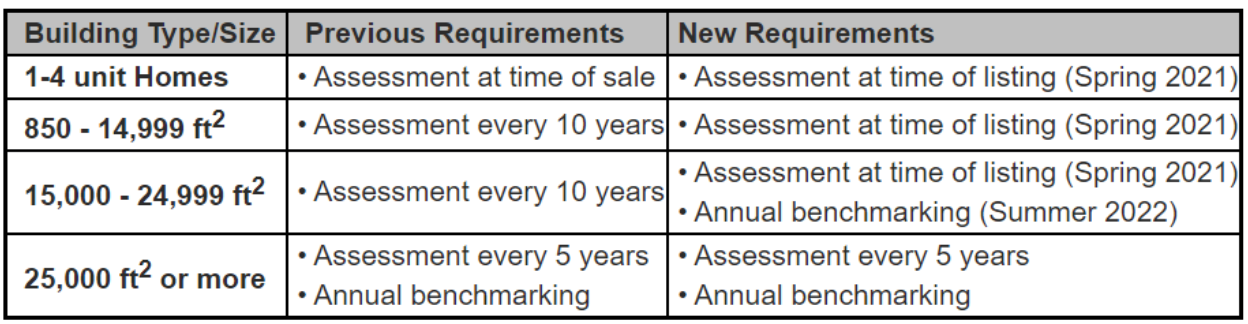
Benchmarking Report: Due by July 1, annually for buildings 25,000 sq. ft and above. Buildings 15,000 sq. ft and above will be required to comply beginning July 1, 2022.

Performance Report: Assessment is due every five-years for buildings over 25,000 sq.ft., and time of listing for buildings under 25,000 sq. ft.

Fees: No benchmarking fees. $240 energy assessment filing fee for large buildings over 25,000 sq. ft. See table for a time of sale assessment filing fees.

Program Summary: Commercial and residential buildings below 15,000 sq. ft. are required to complete and submit an energy assessment at the time of sale. Assessments must be completed by registered assessors/auditors. Buildings 15,000 sq.ft. and above must submit benchmarking reports annually, in addition to their assessment requirement. See table:

BESO - City of Berkeley, CA - https://www.cityofberkeley.info/BESO/

Enforcement: “Any person who violates the Ordinance may be subject to a fine of $100 for each violation, and an additional fine of up to $25 for each day that the violation continues, up to a maximum of $1,000 per violation.”

Southern California Programs By City

Local Policy: Los Angeles’ Green New Deal

Benchmarking Report: Due by June 1, annually

Performance Report: Due by December 1, every five-years based on the last digit of your LADBS Building ID

Fees: LADBS registration fee + surcharge for benchmarking is $66.41 / building / year, and $183 per audit/RCx confirmation submittal.

Program Summary: Buildings 20,000 sq ft or more in gross floor area privately owned or owned by a local agency of the State in the City of Los Angeles must report energy and water use annually, and a performance report every five years, based on qualifying performance metrics or prescribed efficiency measures outlined in the ordinance. Head to our EBEWE page for further program details.

Enforcement: Program non-compliance fee of $202 / building, plus disruption to LADBS permitting requests, or transactions. This fee is subject to double digit interest each month.

Local Policy: The City of San Diego Climate Action Plan (CAP)

Benchmarking Report: Due by June 1, annually

Performance Report: N/A

Fees: N/A

Program Summary: Commercial buildings over 50,000 square feet and multifamily and mixed-use buildings greater than 50,000 square feet and with 17 or more residential accounts in the City of San Diego are required to submit whole-building energy data (water not required).

Enforcement: Violations may be prosecuted as misdemeanors subject to the fines and custody provided in San Diego Municipal Code. Additionally, the Department Director may seek injunctive relief and civil penalties in the Superior Court pursuant to San Diego Municipal Code.