The state of Washington’s Clean Building Performance Standards (CBPS) program is a statewide energy benchmarking & emissions reduction program requiring owners of existing buildings to report energy use using ENERGY STAR® Portfolio Manager®. Effective as of May 2019, this program provides building owners insight into their building’s energy efficiency and helps meet the State of Washington’s Climate Action Plan goals.

BEGIN COMPLIANCE NOW

WHAT BUILDINGS ARE COVERED UNDER WASHINGTON CBPS?

Tier 1

Non-residential, hotel, motel, and dormitory buildings over 50,000 Sq. Ft.

Tier 2

Non-residential, hotel, motel, and dormitory buildings between 20,000 and 50,000 Sq. Ft.

AND

All residential multifamily buildings over 20,000 Sq. Ft.

WHAT INFORMATION IS REQUIRED FOR BENCHMARKING?

Benchmarking reporting requires 12 calendar months of whole-building energy and building use data. For example, in 2025, building owners must report 12 months of 2024 data.

WHEN ARE WASHINGTON CBPS BENCHMARKING REPORTS DUE?

Compliance is required by June 1. The year in which different buildings begin reporting is explained below. Washington CBPS does not yet require annual benchmarking, but we strongly recommend annual benchmarking because it provides year-over-year data of your efficiency efforts.

Benchmarking reports must be submitted using the previous year’s data via ENERGY STAR® Portfolio Manager®. This is the EPA’s benchmarking tool that is used for compliance reporting in most ordinances across the country.

WHAT INFORMATION IS REQUIRED FOR BPS?

Washington CBPS has different requirements depending on the covered building tier. All buildings must benchmark, implement an operations and maintenance (O&M) program, and create an energy management plan (EMP). O&M programs must be initiated 12 months before the building’s compliance date.

Additionally, Tier 1 buildings must determine an energy use intensity (EUI) target based on their benchmarking data. If one is not identifiable or possible to achieve, the building will initiate an “investment criteria” pathway. Investment criteria pathways entail performing an ASHRAE Level II energy audit, life-cycle cost analysis, and implementing all cost-effective efficiency measures.

WHEN ARE WASHINGTON CBPS REPORTS DUE?

Tier 1 Compliance Due Date

June 1, 2026 – Buildings over 220,000 Sq. Ft.

June 1, 2027 – Buildings over 90,000 to 220,000 Sq. Ft.

June 1, 2028 – Buildings over 50,000 to 90,000 Sq. Ft.

Tier 2 Compliance Due Date

July 1, 2027 – All tier 2 covered buildings.

Buildings will need to comply every 5 years after their initial deadlines. Washington will use the benchmarking data from 2026-2028 to develop the next cycle’s targets.

WHAT IS THIRD-PARTY DATA VERIFICATION?

Third-party data verification requires owners/managers of covered buildings to hire a third-party expert who will independently review and verify the building’s benchmarking data.

While Washington CBPS does not have a standard data verification regulation, it does require a qualified person to establish energy use targets and state in writing that the Energy Management plan and Operations and Maintenance program requirements have been developed, implemented, and maintained.

A qualified person can be a Certified Energy Manager (CEM), Energy Management Professional (EMP), or a qualified energy auditor.

WHAT ARE THE PENALTIES IF YOU DON'T COMPLY WITH WASHINGTON CBPS?

The Washington State Department of Commerce is authorized to impose penalties upon failure to submit of up to $5,000 plus an additional amount for ongoing violations. This added amount can be up to $1 per square foot per year.

Tier 2 buildings may be assessed penalties up to 30 cents per square foot for failing to submit proper documentation.

HOW DO I COMPLY WITH WASHINGTON CBPS?

CONTACT US HERE to learn more and get started with compliance.

Washington CBPS compliance can be confusing and hard to navigate. Bringing on a consultant like VCA Green streamlines the entire process while ensuring accurate reporting. We also offer free consultations with our benchmarking clients to review the reports and identify inefficiencies to improve.

WHEN SHOULD I START WASHINGTON CBPS COMPLIANCE?

Ordinances such as Washington CBPS are already in effect across the country, and deadlines are rapidly approaching. Retrieving historical building data will take time, especially when coordinating with property managers and utilities.

Waiting until the last minute risks missing compliance windows resulting in fines and enforcement penalties. VCA Green takes every measure to ensure complete and accurate data collection. The sooner you reach out, the sooner you will reach compliance.

VCA GREEN PROCESS

With every phase of the process, VCA Green’s experienced and knowledgeable team is here to guide you on the results, options, and path forward to meet your compliance goals.

RELEVANT SERVICES


The City of Berkeley Building Emissions Saving Ordinance (BESO), is a citywide energy benchmarking & disclosure program requiring owners of existing buildings to report energy, water, and building use annually, using ENERGY STAR® Portfolio Manager®. Effective as of January 2015, this program provides building owners insight into their building’s energy efficiency and helps meet the City of Berkeley’s Climate Action Plan goals.

BEGIN COMPLIANCE NOW

WHAT BUILDINGS ARE COVERED UNDER BERKELEY BESO?

Property Type & Requirement
  • Buildings between 850-14,999 Sq. Ft. and 1-4 unit homes require an energy assessment when listed for sale.
  • Buildings between 15,000 and 24,999 Sq. Ft. require annual benchmarking and must conduct an energy assessment when listed for sale.
  • Buildings 25,000 Sq. Ft. or more require annual benchmarking and an energy assessment every 5 years.

WHAT INFORMATION IS REQUIRED FOR BENCHMARKING?

Annual benchmarking reporting requires 12 calendar months of whole-building energy and building use data. For example, in 2025, building owners must report 12 months of 2024 data.

WHEN ARE BERKELEY BESO BENCHMARKING REPORTS DUE?

July 1, annually. Benchmarking reports must be submitted on an annual basis using the previous year’s data via ENERGY STAR® Portfolio Manager®. This is the EPA’s benchmarking tool that is used for compliance reporting in most ordinances across the country.

WHAT INFORMATION IS REQUIRED FOR BPS?

Building Performance Standards (BPS) are often considered Phase II of these building energy use ordinances. After reporting your benchmarking data, many ordinances require you to make changes to the building’s operations or equipment to lower energy use over time.

Under Berkeley BESO buildings 850-24,999 Sq. Ft. must hire a qualified assessor to complete an energy assessment and report before listing the building for sale, and provide it to the City and prospective buyers. Alternatively, sellers may defer the BESO assessment requirement to the buyer. 

For buildings 25,000 Sq. Ft. and larger, owners must submit energy assessments every five years and energy benchmarks annually to comply with the Building Emissions Saving Ordinance (BESO). Some buildings qualify for exemptions or deferrals; refer to the summary document for details. Collect verification documentation, such as your ENERGY STAR report or building permit, to submit with your application. 

WHEN ARE BERKELEY BESO ASSESSMENTS DUE?

Energy assessments are due every 5 years for buildings over 25,000 Sq. Ft. The first was due July 1, 2019. So, future assessment years will be 2029, 2034, 2039, etc.

Remember, smaller buildings do not need to complete assessments on this cycle. They only need to do so when listing the property for sale.

WHAT ARE THE PENALTIES IF YOU DON'T COMPLY WITH BERKELEY BESO?

Failure to comply with Berkeley BESO can result in an $85 administrative late fee. After 90-day notice, citation penalties range from $100 – $500 per violation, per day.

HOW DO I COMPLY WITH BERKELEY BESO?

CONTACT US HERE to learn more and get started with compliance.

Berkeley BESO compliance can be confusing and hard to navigate. Bringing on a consultant like VCA Green streamlines the entire process while ensuring accurate reporting. We also offer free consultations with our benchmarking clients to review the reports and identify inefficiencies to improve.

WHEN SHOULD I START BERKELEY BESO COMPLIANCE?

Ordinances such as Berkeley BESO are already in effect across the country, and deadlines are rapidly approaching. Retrieving historical building data will take time, especially when coordinating with property managers and utilities.

Waiting until the last minute risks missing compliance windows resulting in fines and enforcement penalties. VCA Green takes every measure to ensure complete and accurate data collection. The sooner you reach out, the sooner you will reach compliance.

BERKELEY BESO RESOURCES

Policy

Berkeley BESO

Bill Text

Berkeley Climate Action Plan

Enforcing Agency

City of Berkeley

VCA GREEN IS A BERKELEY BESO AUTHORIZED SERVICE PROVIDER

VCA GREEN PROCESS

With every phase of the process, VCA Green’s experienced and knowledgeable team is here to guide you on the results, options, and path forward to meet your compliance goals.

RELEVANT SERVICES

The City of New Orleans Building Energy Benchmarking Ordinance is a citywide energy benchmarking & disclosure program requiring owners of existing buildings to report energy use annually, using ENERGY STAR® Portfolio Manager®. Effective as of June 2025, this program provides building owners insight into their building’s energy efficiency and helps meet the City of New Orleans’ Climate Action Plan goals.

BEGIN COMPLIANCE NOW

WHAT BUILDINGS ARE COVERED UNDER NEW ORLEANS BENCHMARKING?

Property Size

Non-residential and multifamily buildings over 20,000 Sq. Ft.

WHAT INFORMATION IS REQUIRED FOR BENCHMARKING?

Annual benchmarking reporting requires 12 calendar months of whole-building energy and building use data. For example, in 2025, building owners must report 12 months of 2024 data.

WHEN ARE NEW ORLEANS BENCHMARKING REPORTS DUE?

May 31, annually*. Benchmarking reports must be submitted on an annual basis using the previous year’s data via ENERGY STAR® Portfolio Manager®. This is the EPA’s benchmarking tool that is used for compliance reporting in most ordinances across the country.

*Buildings over 50,000 Sq. Ft. need to comply beginning January 1, 2026. Buildings between 20,000 and 50,000 Sq. Ft. begin reporting January 1, 2027.

WHAT INFORMATION IS REQUIRED FOR BPS?

Building Performance Standards (BPS) are often considered Phase II of these building energy use ordinances. After reporting your benchmarking data, many ordinances require you to make changes to the building’s operations or equipment to lower energy use over time.

New Orleans does not require BPS compliance at this time. However, improving your building’s efficiency can lower your operating costs, improve your NOI, and save you money in the long run.

WHAT IS THIRD-PARTY DATA VERIFICATION?

Third-party data verification requires owners/managers of covered buildings to hire a third-party expert who will independently review and verify the building’s benchmarking data.

New Orleans does not require data verification at this time.

WHAT ARE THE PENALTIES IF YOU DON'T COMPLY WITH NEW ORLEANS BENCHMARKING?

Violating any aspect of the New Orleans Building Energy Benchmarking Ordinance will result in fines between $1,000 and $3000. 

Penalties are waived for buildings in their first year of compliance.

HOW DO I COMPLY WITH NEW ORLEANS BENCHMARKING?

CONTACT US HERE to learn more and get started with compliance.

New Orleans Building Energy Benchmarking Ordinance compliance can be confusing and hard to navigate. Bringing on a consultant like VCA Green streamlines the entire process while ensuring accurate reporting. We also offer free consultations with our benchmarking clients to review the reports and identify inefficiencies to improve.

WHEN SHOULD I START NEW ORLEANS BENCHMARKING COMPLIANCE?

Ordinances such as the New Orleans Building Energy Benchmarking Ordinance are already in effect across the country, and deadlines are rapidly approaching. Retrieving historical building data will take time, especially when coordinating with property managers and utilities.

Waiting until the last minute risks missing compliance windows resulting in fines and enforcement penalties. VCA Green takes every measure to ensure complete and accurate data collection. The sooner you reach out, the sooner you will reach compliance.

VCA GREEN PROCESS

With every phase of the process, VCA Green’s experienced and knowledgeable team is here to guide you on the results, options, and path forward to meet your compliance goals.

RELEVANT SERVICES

The City of Cambridge Building Energy Use Disclosure Ordinance (Cambridge BEUDO), is a citywide energy benchmarking & disclosure program requiring owners of existing buildings to report energy and water use annually, using ENERGY STAR® Portfolio Manager®. Effective as of June 2023, this program provides building owners insight into their building’s energy efficiency and helps meet the City of Cambridge’s Climate Action Plan goals.

BEGIN COMPLIANCE NOW

WHAT BUILDINGS ARE COVERED UNDER CAMBRIDGE BEUDO?

Property Size

Commercial buildings over 25,000 Sq .Ft. or 50+ residential dwelling units.

Municipal buildings over 10,000 Sq. Ft.

WHAT INFORMATION IS REQUIRED FOR BENCHMARKING?

Annual benchmarking reporting requires 12 calendar months of whole-building energy, water, and building use data. For example, in 2025, building owners must report 12 months of 2024 data.

WHEN ARE CAMBRIDGE BEUDO BENCHMARKING REPORTS DUE?

May 1, annually. Benchmarking reports must be submitted on an annual basis using the previous year’s data via ENERGY STAR® Portfolio Manager®. This is the EPA’s benchmarking tool that is used for compliance reporting in most ordinances across the country.

WHAT INFORMATION IS REQUIRED FOR BPS?

Building Performance Standards (BPS) are often considered Phase II of these building energy use ordinances. After reporting your benchmarking data, many ordinances require you to make changes to the building’s operations or equipment to lower energy use over time.

Cambridge BEUDO requires covered properties to meet Greenhouse Gas (GHG) Emissions reductions requirements on a schedule outlined below. These reductions use the baseline years 2018-2019, meaning they must meet the reduction targets relative to the data from those years.

WHEN ARE CAMBRIDGE BEUDO BPS REPORTS DUE?

For Buildings Over 100,000 Sq. Ft.

Compliance Period 1 (2026-2029) – annual GHG emissions must be reduced by at least 20% from baseline.

Compliance Period 2 (2030-2034) – annual GHG emissions must be reduced by at least 60% from baseline.

From 2035 onwards, GHG emissions will not exceed zero.

For Buildings Between 25,000 Sq. Ft. and 100,000 Sq. Ft.

Compliance Period 1 (2026-2029) – annual GHG emissions cannot be more than emissions from the baseline year.

Compliance Period 2 (2030-2034) – annual GHG emissions must be reduced by at least 40% from baseline.

Compliance Period 3 (2035-2039) – annual GHG emissions must be reduced by at least 60% from baseline.

Compliance Period 4 (2040-2044) – annual GHG emissions must be reduced by at least 80% from baseline.

Compliance Period 5 (2045-2049) – annual GHG emissions must be reduced by at least 90% from baseline.

From 2050 onwards, annual GHG emissions will not exceed zero.

WHAT IS THIRD-PARTY DATA VERIFICATION?

Third-party data verification requires owners/managers of covered buildings to hire a third-party expert who will independently review and verify the building’s benchmarking data.

Under Cambridge BEUDO, data verification was required for the two baseline years (2018-2019) and is required during the first year of each BPS compliance period.

WHAT ARE THE PENALTIES IF YOU DON'T COMPLY WITH CAMBRIDGE BEUDO?

BEUDO violations will result in:

  • A written warning for first violation

  • Fines of $300 per violation, per day for any subsequent violations

    • Each day that a property remains in violation will be considered a separate offense

These penalty guidelines apply individually to all aspects of the ordinance including, benchmarking, data verification, and emissions reduction requirements.

HOW DO I COMPLY WITH CAMBRIDGE BEUDO?

CONTACT US HERE to learn more and get started with compliance.

Cambridge BEUDO compliance can be confusing and hard to navigate. Bringing on a consultant like VCA Green streamlines the entire process while ensuring accurate reporting. We also offer free consultations with our benchmarking clients to review the reports and identify inefficiencies to improve.

WHEN SHOULD I START CAMBRIDGE BEUDO COMPLIANCE?

Ordinances such as Cambridge BEUDO are already in effect across the country, and deadlines are rapidly approaching. Retrieving historical building data will take time, especially when coordinating with property managers and utilities.

Waiting until the last minute risks missing compliance windows resulting in fines and enforcement penalties. VCA Green takes every measure to ensure complete and accurate data collection. The sooner you reach out, the sooner you can achieve compliance.

VCA GREEN APPROACH

With every phase of the process, VCA Green’s experienced and knowledgeable team is here to guide you on the results, options, and path forward to meet your compliance goals.

RELEVANT SERVICES

The City of Clayton Building Energy Awareness Ordinance is a citywide energy benchmarking & disclosure program requiring owners of existing buildings to report energy and water use annually, using ENERGY STAR® Portfolio Manager®. Effective as of February 2025, this program provides building owners insight into their building’s energy efficiency and helps meet the City of Clayton’s Climate Action Plan goals.

BEGIN COMPLIANCE NOW

WHAT BUILDINGS ARE COVERED UNDER CLAYTON BUILDING ENERGY AWARENESS ORDINANCE?

Group 1 Properties

Buildings owned or partially owned by the City of Clayton over 10,000 Sq. Ft.

Group 2 Properties

Non-City buildings over 100,000 Sq. Ft.

WHAT INFORMATION IS REQUIRED FOR BENCHMARKING?

Annual benchmarking reporting requires 12 calendar months of whole-building energy, water, and building use data. For example, in 2025, building owners must report 12 months of 2024 data.

WHEN ARE CLAYTON BENCHMARKING REPORTS DUE?

April 1, annually. Group 1 Properties begin reporting in 2025. Group 2 Properties begin reporting in 2027.

Benchmarking reports must be submitted on an annual basis using the previous year’s data via ENERGY STAR® Portfolio Manager®. This is the EPA’s benchmarking tool that is used for compliance reporting in most ordinances across the country.

WHAT INFORMATION IS REQUIRED FOR BPS?

Building Performance Standards (BPS) are often considered Phase II of these building energy use ordinances. After reporting your benchmarking data, many ordinances require you to make changes to the building’s operations or equipment to lower energy use over time.

The Clayton Building Energy Awareness Ordinance does not require building efficiency improvement at this time.

WHAT IS THIRD-PARTY DATA VERIFICATION?

Third-party data verification requires owners/managers of covered buildings to hire a third-party expert who will independently review and verify the building’s benchmarking data.

The Clayton Building Energy Awareness Ordinance does not require data verification at this time.

WHAT ARE THE PENALTIES IF YOU DON'T COMPLY WITH THE CLAYTON BUILDING ENERGY AWARENESS ORDINANCE?

Failure to comply with the Clayton Building Energy Awareness Ordinance will result in a fine up to $1,000 to the building owner. Each day a violation continues constitutes a separate offense.

HOW DO I COMPLY WITH CLAYTON BUILDING ENERGY AWARENESS ORDINANCE?

CONTACT US HERE to learn more and get started with compliance.

Clayton Building Energy Awareness compliance can be confusing and hard to navigate. Bringing on a consultant like VCA Green streamlines the entire process while ensuring accurate reporting. We also offer free consultations with our benchmarking clients to review the reports and identify inefficiencies to improve.

WHEN SHOULD I START CLAYTON BUILDING ENERGY AWARENESS ORDINANCE COMPLIANCE?

Ordinances such as Clayton Building Energy Awareness Ordinance are already in effect across the country, and deadlines are rapidly approaching. Retrieving historical building data will take time, especially when coordinating with property managers and utilities.

Waiting until the last minute risks missing compliance windows resulting in fines and enforcement penalties. VCA Green takes every measure to ensure complete and accurate data collection. The sooner you reach out, the sooner you will reach compliance.

CLAYTON BUILDING ENERGY AWARENESS ORDINANCE RESOURCES

VCA GREEN PROCESS

With every phase of the process, VCA Green’s experienced and knowledgeable team is here to guide you on the results, options, and path forward to meet your compliance goals.

RELEVANT SERVICES

As Boston tightens its regulations to combat climate change, building owners are facing new challenges to stay compliant with the Building Emissions Reduction and Disclosure Ordinance (BERDO). If you own or manage a large commercial property, understanding how to navigate these standards is crucial to avoid fines and penalties. That’s where Green Econome steps in—helping you comply, reduce emissions, and achieve long-term energy savings. 

What Are BERDO Emissions Requirements? 

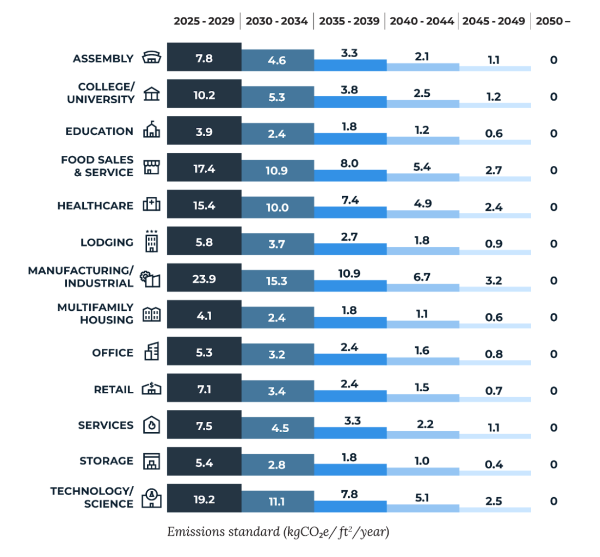
To reduce the environmental impact of Boston’s largest buildings, the city has set strict emissions standards that gradually lower every five years, aiming for net-zero emissions by 2050. Here are the key points you should be aware of: 

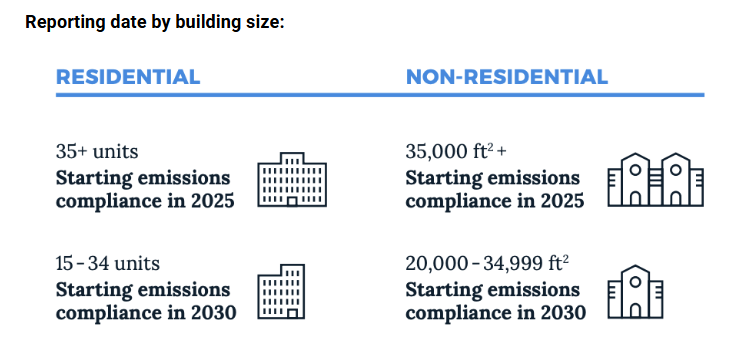
  • Buildings over 20,000 square feet or residential properties with 15+ units must comply. 
  • By 2025 or 2030 (depending on your building’s size), you’ll need to report your energy use and greenhouse gas emissions to the city annually.  
  • Every five years, buildings must either reduce emissions by 15% or complete a detailed energy assessment. 

Emissions reduction schedule by building type: 

How Green Econome Simplifies BERDO Compliance  

We specialize in helping Boston commercial real estate owners meet energy benchmarking and emissions reduction targets. With our expert team, you can: 

We assist in benchmarking, tracking, and reporting your building’s energy use and emissions through ENERGY STAR® Portfolio Manager®. We ensure that your data is accurate and submitted on time, so you stay compliant with BERDO’s requirements year after year. If you already have benchmarking covered, we can provide third-party verification services.   

Beyond benchmarking, Green Econome can help plan an effective strategy that aligns your reduction targets with company goals and budget. By conducting energy audits and analyses, Green Econome acts as an extension of your team to make efficiency recommendations, provide energy management, verify and track reductions to ensure you are on track for BERDO compliance.  

Green Econome is an end-to-end service provider that can manage and/or install your energy and water efficiency projects. Whether an LED lighting retrofit or a full scale building decarbonization and clean energy system, we leverage a national team of professionals to get the job done. 

Avoid Penalties – Act Today! 

The clock is ticking on Boston’s emissions standards, and penalties for non-compliance can add up fast, up to $1,000/day! Green Econome offers a streamlined approach to meet BERDO’s energy and emissions requirements, saving you time, money, and stress. Ready to make your building more efficient and compliant? Contact Green Econome today for a consultation and see how we can help you reduce emissions, lower costs, and stay ahead of Boston’s climate regulations. 

The clock is ticking on Boston’s emissions standards, and penalties for non-compliance can add up fast, up to $1,000/day! Green Econome offers a streamlined approach to meet BERDO’s energy and emissions requirements, saving you time, money, and stress. Ready to make your building more efficient and compliant? Contact Green Econome today for a consultation and see how we can help you reduce emissions, lower costs, and stay ahead of Boston’s climate regulations. 

DOWNLOAD BOSTON BERDO BROCHURE

RELEVANT SERVICES

Cities around the US are implementing energy benchmarking laws. Boston is paving the way for energy efficiency with their Building Energy Reporting and Disclosure Ordinance (BERDO). The BERDO energy benchmarking ordinance provides an excellent opportunity for commercial real estate owners to improve their energy performance while saving money and staying ahead of future greenhouse gas (GHG) emissions reduction requirements. If you’re a property owner or manager in the city, staying compliant with BERDO is crucial—and Green Econome is here to help. 

What is BERDO Energy Benchmarking in Boston?

Passed in 2013, Boston’s Building Energy Reporting and Disclosure Ordinance (BERDO) requires large commercial and residential buildings to report their annual energy and water usage by May 15th annually to the city, as well as stating emissions standards every 5 years, starting in 2025 or 2030 depending on building size. This regulation applies to: 

  • Residential buildings that have 15 or more units 
  • Non-residential buildings that are 20,000 square feet or larger 
  • Parcels with multiple buildings totaling at least 20,000 square feet or 15 units 

What are the Benefits of BERDO?

Failing to meet BERDO energy benchmarking reporting requirements can result in penalties of up to $1,000/day! 

But beyond compliance, energy benchmarking through ENERGY STAR® Portfolio Manager® can help property owners identify areas for efficiency improvements and cost savings. Tracking and optimizing energy usage can significantly increase the value of your commercial property. Buildings that perform better in energy efficiency often attract more tenants and offer long-term savings on utility bills. By staying ahead of Boston’s energy benchmarking ordinance, you’ll ensure your property remains competitive in the city’s fast-growing commercial real estate market. 

Maximize Energy Efficiency in Boston with Green Econome’s Energy Benchmarking Services 

With over 20 years of combined experience in commercial real estate and benchmarking, Green Econome’s expert team is here to take the stress of BERDO compliance off your plate. Don’t wait until the last minute—get in touch with Green Econome today to simplify the compliance process and unlock energy savings for your property. For more information on how we can assist with Boston BERDO compliance, or energy benchmarking for commercial properties in any US state, contact Green Econome today!

RELEVANT SERVICES

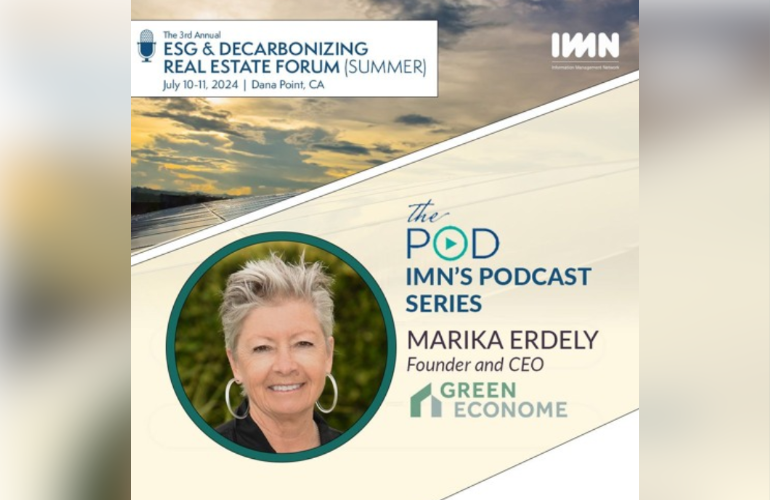
In this episode of IMN’s Spotlight Podcast: Shining the Light on Real Estate Market Players, Green Econome’s founder Marika Erdely sits down to talk about what running a woman-owned business focusing on ESG in commercial real estate is like. She discusses the importance of energy benchmarking, successful case studies, mentorship, and the future potential of Green Econome and the industry.

You don’t want to miss this tell-all episode! You can listen to this episode and more on IMN’s Spotlight Podcast on SoundCloud or Spotify.

Sit down with Green Econome’s own Marika Erdely and the inimitable Kate Shoemaker of Assured Partners and CREW Orange County, and enjoy this episode of “Behind The Logo”.

In this fun and candid conversation, Kate and Marika discuss everything from the “Need to Do Initiative” of energy efficiency and sustainability in CRE, Arnold Schwarzenegger, networking scaries, and building a better future for all. 

As part of CREW Network, the industry’s premier business organization, CREW Orange County transforms the commercial real estate industry by advancing women globally. CREW Network’s membership of 12,000 professionals in over 75 major global markets represents all aspects of commercial real estate—providing our members with direct access to real estate professionals across all geographies and disciplines.

Head over to CREW Orange County to explore their mission, community, and opportunities to connect.

Here at Green Econome, we’ve been at the forefront of ESG (Environmental, Social, Governance) reporting, eagerly anticipating the U.S. Securities and Exchange Commission (SEC) ruling on mandatory disclosures for public companies. Fundamentally, ESG is a way of doing business. Green Econome lives in the world of the “E”, the “Environmental” with our ENERGY STAR® benchmarking and energy and water efficiency services. While we recognize that the “S” and the “G” are equally important for businesses to report on, we are going to focus on the “E” and how that relates to the SEC’s new ruling. Let’s get into it.

Unpacking the SEC Climate-Related Disclosures

What are public companies required to report and how does that intersect with commercial real estate? On March 6, 2024, the SEC passed legislation requiring public companies to measure their Scope 1 and 2 emissions as part of their annual reporting and include how climate risk will affect their businesses in the near future. This ruling is meant to enhance and standardize climate-related disclosures. The SEC also included a materiality clause to help guide businesses as to what to report. Although, it’s important to note that since March, there has been intense business opposition. But let’s get to the bottom line here: what are Scope 1 and Scope 2 emissions and why do we need to report on them?

Defining Scope 1, 2, and 3 Emissions

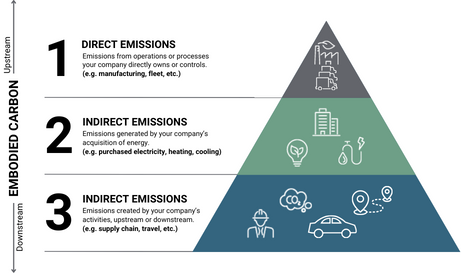
Scope Emissions Pyramid

Basically, Scope 1 is for all direct Greenhouse Gas (GHG) emissions through the combustion of gas in buildings or by the business’ fleet. Scope 2 is indirect emissions for the electricity the business is consuming from the grid. Both emissions are part of the collection of data standard to ENERGY STAR benchmarking. Scope 3, although significant, was not included in the SEC’s ruling.

The ‘E’ in ESG is where Green Econome thrives

We are here to ENERGY STAR Benchmark your portfolio to meet your “E” goals and reduce the operating costs of your building. As a woman-owned, full-service energy and water efficiency construction and consulting company, we have over 20 years of combined experience. We provide accurate benchmarking services and insights to recommend solutions and incentives that will increase the NOI and market value of your property. Let us help you better understand and accomplish your property’s ESG goals to reduce emissions and meet science-based targets (SBTi).

Contact Founder and CEO Marika Erdely
Mobile: 818-681-5750
Email: marikae@greeneconome.com

DOWNLOAD OUR ESG SERVICES BROCHURE

RELEVANT SERVICES