DOWNLOAD BPS PRESENTATION

As cities and states implement climate action plans, energy policy is rapidly shifting to meet reduction targets. For existing buildings, the main strategy is through Benchmarking and Building Performance Standards (BPS).

Watch the recording to look back on actionable insights from industry experts Marika Erdely, CEO of Green Econome, and Tyler Stafford, Business Development Manager of Abraxas Energy. In the presentation they unpack the key components of BPS, how you can benefit from compliance, and the roadmap to get you there.

Key Takeaways

  • What are Building Performance Standards and why you should care?
  • Why you should act: benefits of compliance
  • Getting it done: compliance roadmap
  • Paying for it: incentives, tax credits & rebates
  • Success stories from CA, CO, and MA.

Who Should Watch

  • Commercial and multifamily property owners, managers, and tenants
  • Commercial real estate brokers and asset managers
  • Commercial real estate service providers

Speakers

Marika Erdely, MBA, CEA, LEED AP BD+C, Fitwel Ambassador

Founder & CEO, Green Econome

Marika Erdely is the founder and CEO of Green Econome, a Southern California-based, full-service Energy Consulting and Construction Company with over 20 years of combined experience in the energy and water efficiency industry.

Prior to founding Green Econome, Marika held the role of CFO/VP at New Millennium Homes, a major home builder and land developer of The Oaks of Calabasas and had previously worked as an accounting professional for nearly thirty years. Marika acquired her Contractors License B (#1001368) in 2007 and C-10 in 2018. Marika is a LEED AP BD+C (Building Design and Construction), a Certified Energy Auditor and a Fitwel Ambassador.

Marika holds an MBA from Pepperdine University and a BA in Business Economics from UCSB. Marika is currently participating as Advocacy Lead for the USGBC Regional Leadership Advisory Board for the LA region.

Tyler Stafford

Business Development Director, Abraxas Energy

Tyler Stafford is the Business Development Director at Abraxas Energy, a forward-thinking energy consulting firm that empowers clients with end-to-end solutions for energy and water efficiency. With a strong focus on sustainable energy management, Abraxas supports its clients from the initial identification of energy-saving opportunities all the way through to the implementation of energy efficiency projects.

With over 10 years of industry experience, Tyler has built a reputation for delivering tailored energy solutions across a wide range of sectors including commercial, industrial, healthcare, higher education, federal/local government, multifamily, and more.

Tyler holds a Bachelor of Science degree from California Polytechnic State University, San Luis Obispo, and continues to leverage his technical and strategic knowledge to drive meaningful impact within the energy sector.  He is also active within the Association of Energy Engineers (AEE) and the National Association of Energy Services Companies (NAESCO).

Marika Erdely, Founder and CEO of Green Econome, recently sat down with GM Properties to discuss energy regulations and optimizing property performance for commercial real estate stakeholders in Southern California.

KEY TAKEAWAYS

  • Key energy disclosure requirements
  • Required data for compliance
  • Impact on building owners
  • Actionable steps for property owners

Summary

This article outlines key energy disclosure laws in Southern California, including LA EBEWE, California AB 802, and local ordinances like Santa Monica’s benchmarking. It explains compliance requirements, data collection methods, and the importance of tenant cooperation. Insights from Marika highlight how compliance can boost efficiency, reduce costs, and increase property value, with actionable tips for property owners like LED upgrades and smart thermostats.

About GM Properties

GM Properties is a Southern California-based boutique commercial real estate firm compiled of seasoned professionals in real estate, property management, and brokerage services. The company has served a wide range of clients since 1963 across industrial, office, retail, and land assets. GM Properties’ team leverages industry-leading platforms to deliver efficient management and access to off-market opportunities.

Are you ready for the next era of warehousing in CA? Watch the presentation recording of AIR CRE’s Town Hall for an exclusive webinar with Marika Erdely, Founder & CEO of Green Econome, as she provides strategic guidance on how to navigate the new legislative requirements of AB 98. Learn how to build the 21st Century Warehouse—an efficient, sustainable, and compliant facility that reduces environmental impact while increasing property value.

KEY TAKEAWAYS

  • A clear understanding of AB 98’s compliance requirements.
  • The long-term benefits of futureproofing your building.
  • Insight into the financial incentives for energy-efficient designs.

ABOUT AIR CRE

AIR CRE is an innovative, member-owned organization that provides commercial real estate professionals in Southern California with the critical tools they need to be successful. AIR CRE curates the best resources that the industry has to offer, and packages them together as a single integrated network. Members have unparalleled access to a system of market research, property listings, contracts, networking, education and dispute resolution services.

While the state of sustainability in the federal government remains on ice, it seems that some states are continuing with their environmental goals. Among them is Colorado. At the end of March, a federal judge dismissed a lawsuit against the state’s energy efficiency standards.

Since it’s here to stay, we wanted to take a moment to dissect the state’s building performance standards, what they are, how to comply, and everything else you need to know.

Why is the State Pushing These Regulations?

I think before getting into Colorado’s building performance standards, it’s worth noting why they implemented them. In recent years, they recognized that they need to consider how to protect the air quality across the state.

As mentioned in the bill, policymakers acknowledge that climate change adversely affects Colorado’s economy, air, and quality of life. As a result, they set goals to achieve at least a 26% reduction in statewide greenhouse gas pollution by 2025, a 50% reduction by 2030, and 90% by 2050.

Building Performance Colorado: State-Wide Policy and Deadlines

There are many nuances involved in Colorado’s Building Performance Colorado (BPC) program, but here are the main points. Covered buildings are required to report benchmarking data every June 1st for the previous calendar year. This started on June 1, 2024 (reporting for 2023 data).

In 2024, the annual benchmarking report required building owners to specify which of the compliance pathways they wanted to follow to reach their 2026 targets. These were pre-set in the bill. Similarly, the 2028 report will need to include their compliance pathway to achieve their 2030 target.

Each of these reports are sent to the Colorado Energy Office (CEO). For benchmarking data reported between 2027-2030, reporting entities need to demonstrate that they met the 2026 site EUI, GHG emission reduction target, data center target, or building specific target.

We recommend reviewing the regulations or contacting us for any fine details.

Energize Denver

In addition to the statewide ordinance, Energize Denver will impact buildings in Denver over 25,000 square feet. It breaks up covered buildings between 5,000 and 24,999 sq. ft. and over 25,000 sq. ft. The city’s main goal is to implement long-term cost savings, a stronger resilient economy, and significantly cut its pollution.

Buildings between 5,000 and 24,999 sq. ft. must certify that 90% of the building’s total lighting load is provided by LED lights or utilize renewable energy generation to meet a minimum of 20% of the building’s annual site energy usage.

Recent Updates to Energize Denver

  • Interim and final target deadlines extended to 2028 and 2032 for buildings over 25,000 sq. ft.
  • Further extensions allowed for buildings approved with long-term compliance plans
  • Vacancy or financial distress allows for 2-year hold on compliance requirements
  • Possible financial penalties for energy efficiency non-compliance cut in half and no penalties will be levied until late 2029
  • No building is required to reduce energy usage by more than 42%

DOWNLOAD ENERGIZE DENVER BROCHURE

Getting Started

Whether you are planning for your next compliance deadline or are just finding out about these regulations now, you should review the state’s guidelines and Denver’s if applicable. Of course, it can get complicated and confusing so consultants like Green Econome make it easy for building owners, managers, and tenants to achieve stress-free compliance. We manage this whole process for you, so you can focus on doing your job while we do ours!

Green Econome, a woman-owned, full-service energy and water efficiency construction and consulting company, has over 20 years of combined experience. We can help explain these complicated tax benefits and make sure your property is getting the most from them. Furthermore, we can recommend solutions that will increase the NOI of your property and increase market value. Feel free to reach out to Green Econome’s founder and CEO, Marika Erdely, at marikae@greeneconome.com.

RELEVANT SERVICES

So, you just received your phase I benchmarking report back. Now what? If Green Econome did your benchmarking, it’s time to schedule your consultation, which is included with your services. During this meeting, we review the results of your benchmarking, discuss areas of concern, and identify potential opportunities for savings. Your building’s benchmarking gives you the foundation to understand how the building is performing. This baseline is required in most building performance ordinances, and it’s the key to unlocking energy and water reduction and cost savings.

Having a comprehensive benchmarking report prepares you perfectly for phase II audits and retrofits. With all the preliminary information in hand, let’s dive into what happens next.

What is Phase II?

If you benchmarked for LA EBEWE Phase I, then you should be looking at Phase II Audit and Retro-commissioning (A/RCx) requirements. If your building does not meet an exemption, you will need an ASHRAE Level II audit. These energy and water audits summarize your building’s performance and then take a detailed account of the specific conditions of your building. Each report identifies room for growth with a cost-benefit analysis of various retrofits that you could complete.

With compliance being required every 5 years, we have found that our clients are best off investing in retrofits to improve their property and qualify for an exemption rather than spending thousands on audits to remain compliant but not gain the value of becoming more efficient.

Across all ordinances with building performance standards (BPS), this second phase is one of the key parts of your local government’s strategy to meet climate action goals. And if a BPS hasn’t already been implemented in your city or state, you can expect it to be in the future as more governments adopt these programs.

It’s important to remember that this audit benefits your building. On average, 30% of the energy used in commercial buildings is wasted, and identifying these inefficiencies presents an opportunity to significantly reduce your operating costs.

Improving Efficiency

Once you have someone complete the audit, you will have a clear understanding of where your building is struggling and what type of project it would benefit from. This is where retrofits come into play.

A great example is a large aerospace company was looking to reduce their energy usage at their manufacturing plants. After upgrading their lighting to LED, incorporating occupancy sensors, and installing more efficient HVAC equipment, we were able to reduce their energy cost by 25%.

We live for projects like that. There are thousands of buildings who benchmark just for compliance sake without using that valuable data to drive high-return improvement projects. Not only are they missing out on savings, but they are having to spend the money unnecessarily on audits moving forward. If you want to see an example of an audit, reach out to us and we can walk you through one!

Why Should I Care?

Beyond the environmental benefits of making your property as efficient as possible, your business becomes future-proofed and saves on costs.

Future Proofing

Efficient buildings ensure long-run operational reliability. While others are paying obscene amounts of money for rising energy costs, you will be doing the opposite while protecting the viability of your investment. And as your local government continues establishing building efficiency regulations, you will be eligible for compliance exemptions having already completed your retrofit.

Cost Saving

In terms of immediate effects, inefficient buildings are expensive. If your benchmarking revealed obvious inefficiencies, a level II audit and potential retrofit can remedy the issue. These don’t have to be intrusive projects. We start with no or low-cost adjustments, then make the best recommendations based on our cost-benefit analysis. Sometimes, it can be as small as a new thermostat system that can make improvements.

Getting Started

If you feel like all of this is confusing, that’s because it is. Every term has its own rabbit hole of information that could leave you with more questions than answers. That’s where we thrive. We manage this whole process for you. Starting with benchmarking, then the audit and our free follow-up consultation to walk you through the important takeaways.

Green Econome, a woman-owned, full-service energy and water efficiency construction and consulting company, has over 20 years of combined experience. We can help explain these complicated tax benefits and make sure your property is getting the most from them. Furthermore, we can recommend solutions that will increase the NOI of your property and increase market value. Feel free to reach out to Green Econome’s founder and CEO, Marika Erdely, at marikae@greeneconome.com.

RELEVANT SERVICES

While there is a seemingly endless list of changes being made by the federal government, especially with respect to ESG and sustainability standards, many states are carrying on as usual. On the state level, New York, New Jersey, Illinois, and Colorado have joined California in continuing to uphold building performance standards.

With so much going on, let’s review existing standards and upcoming reporting deadlines to make sure everyone is up to date.

Reviewing LA EBEWE and Standards in SoCal

If you are reading this post and are located in the Los Angeles area, odds are you are already well aware of LA EBEWE. As a quick refresher, the City of Los Angeles Existing Buildings Energy and Water Efficiency program is a two-part ordinance. Phase I benchmarking required reporting for commercial buildings with more than 20,000 sq. ft. and no residential utility accounts, and residential buildings with more than 20,000 sq. ft. and 17 or more utility accounts. Phase II Audit/Retro-commissioning (A/RCx) requirements are due every 5 years and compliance is based on the benchmarking and performance results of the building.

Most currently, if your building ID from LADBS ends in 8 or 9, your compliance due date is December 1, 2025. That’s this year! While that may seem daunting, exemptions can streamline the entire process and save you money. You can dive into that here.

What’s Happening Across California?

AB 802 requires commercial buildings over 50,000 sq. ft. with no utility accounts and multi-family residential buildings with 50,000 sq. ft. and more than 17 utility accounts to make benchmarking reports annually.

Beyond Los Angeles, the state of California has continued pushing energy compliance and reporting standards. Most notably, Senate Bills 253 and 261, and Assembly Bill 98. SB 253 and 261 are part of the state’s Corporate Climate Data Accountability Act, requiring businesses to report on their emissions and climate-related financial risks. AB 98, on the other hand, impacts warehousing standards, implementing several specific requirements for logistics use facilities of varied sizes.

Locally across California, many cities have ordinances like LA EBEWE such as:

States That Are Following Suit

You may be thinking “oh, well that’s just California”. Well, not quite. In addition to California, New York, New Jersey, Illinois, Colorado, and other states nationally have followed suit. Each has come up with their own reporting standards, along the lines of California’s reporting bills. It is likely that more states are coming.

Moreover, many cities across the country have local ordinances that will require various levels of reporting and building performance standards. Examples that come to mind are Boston BERDO and Orlando BEWES.

How Do I Afford the Reporting Process?

If you find that you are one of many who are required to report it can be daunting, especially financially. Luckily, there are many ways to fund the reporting and retrofitting process.

For LA EBEWE, the cost of meeting an exemption can be up to 65% less than receiving an ASHRAE Level II energy and or water audit and RCx report. If you are eligible, you can also gain ENERGY STAR Certification which can help with the lease rate and marketing of your property.

High performing, efficient buildings also save money on utility bills and attract higher value tenants that can help offset the costs of an audit or retrofit. There are also many opportunities for tax credits and other financial incentives for buildings that exceed standards depending on your region.

Where Can I Learn More?

Depending on where you are located, you should review the local and state requirements for your business or property. Green Econome specializes in consulting through these processes and has tons of informational materials for ordinances across the country.

The most important part is starting your benchmarking and audits now. These building compliance projects are not done overnight. By getting ahead of the game you will be able to offset future costs and reduce your current operating expenses.

Green Econome, a woman-owned, full-service energy and water efficiency construction and consulting company, has over 20 years of combined experience. We can help explain these complicated tax benefits and make sure your property is getting the most from them. Furthermore, we can recommend solutions that will increase the NOI of your property and increase market value. Feel free to reach out to Green Econome’s founder and CEO, Marika Erdely, at marikae@greeneconome.com.

RELEVANT SERVICES

Approved by Governor Newsom in September 2024, Assembly Bill No. 98 (AB 98) is making waves in California’s logistics development and has left many in the logistics real estate industry grappling with its implications. While the new energy efficiency requirements bring challenges, it also opens the door to unexpected opportunities in warehouse sustainability. 

What if complying with AB 98 could save money, attract tenants, and give logistics properties an edge above their competition? Let’s look at the bill and how to take advantage of it. 

What Is AB 98?

Taking effect on January 1, 2026, this bill is poised to change the future of logistics in California. Its main goals are to reduce the environmental impact of logistics developments, particularly for warehouses near sensitive receptors. Since the bill also incorporates forthcoming California Title 24 building energy standards and CALGreen reach codes, it poses a challenge to the development of logistics properties in the state. 

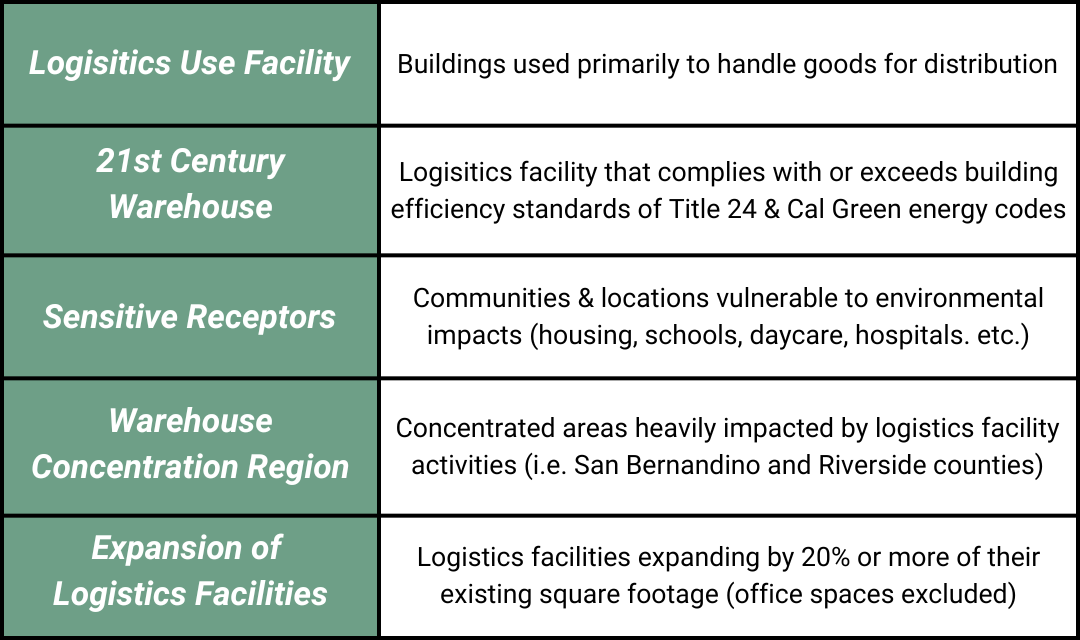
AB 98 Key Terms

Logisitics Use Facility

Which Building Types are Affected by AB 98?

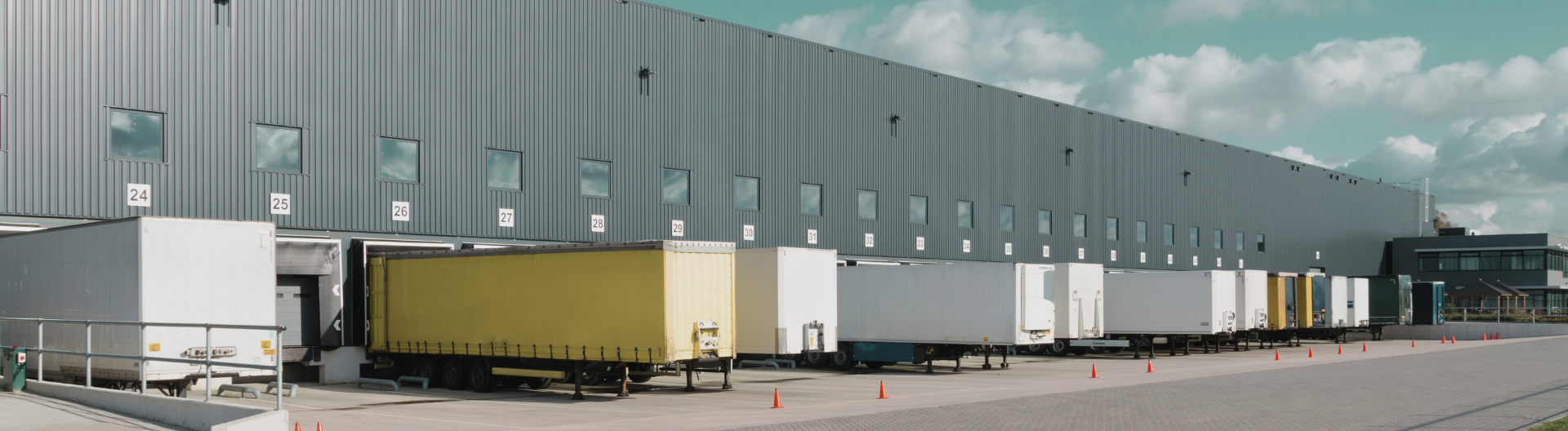
To reduce the impact on surrounding communities and set up infrastructure for a more efficient future, any newly proposed logistics development or existing ones expanding by 20% and within 900 feet of a sensitive receptor, will face many new restrictions.  

What are 21st Century Warehouse Design and Build Standards?

  • Truck loading bays will need to be oriented away from sensitive receptors
  • New minimum distances between loading bays and residential areas
  • Updated mitigation standards for noise and light pollution using screening and buffering
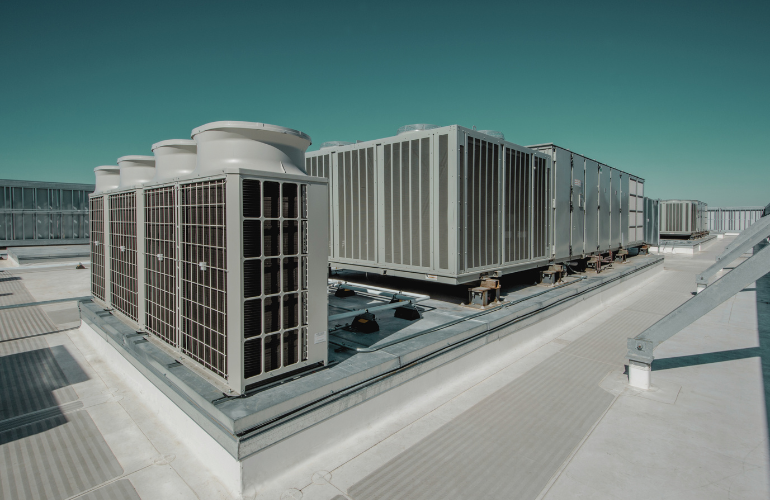
  • Must incorporate energy-efficient features, such as EV charging infrastructure, PV solar panels and battery storage, cool roofing, and high-efficiency HVAC systems

In addition to the updated building standards, facility operators will need to submit truck routing plans to and from the state highway system that avoid sensitive receptors. AB 98 also seeks to protect affordable housing, requiring a 2-to-1 replacement of demolished housing units that have been occupied within the last 10 years.  

Who is Affected by AB 98?

As with most newly passed bills, there are many stakeholders that will be impacted. Logistics owners and developers will certainly face higher costs as they design and build around the updated building regulations. While existing properties are unaffected, any new developments or current buildings wanting to expand by 20% or more will need to be green building compliant 

Simultaneously, the communities surrounding these facilities will benefit from reduced pollution and face fewer disruptions from truck routes. 

Top 5 Ways to Offset AB 98 Development Costs

1. 21st Century Warehouse Retrofitting

Retrofitting existing facilities with features like PV solar panels, LED lighting, and high-efficiency HVAC systems will be essential in being AB 98 compliant. If a property is looking to expand, having these features will make the entire development process simpler and more cost effective in the long run. 

2. Cost Offsets from High-Efficiency Developments

By optimizing logistics developments to be as energy efficient as possible, building owners can save on operational costs, offsetting the more expensive regulations required under AB 98. Additionally, they could take advantage of tax incentives and rebates for renewable energy adoption, further offsetting the cost of becoming AB 98 compliant.

3. Property Value Enhancement

Beyond basic level compliance, qualifying for building certifications such as ENERGY STAR, Fitwel, LEED, and WELL can make your development more attractive to investors and prospective tenants. Having higher-value tenants and certified buildings can give you a significant competitive advantage while other developments struggle to become compliant.  

4. Roadmap to Become AB 98 Compliant

With all the new regulations of California warehouse compliance, it can be daunting to adjust. A consultant, such as Green Econome, can help owners procure the necessary experts, manage the implementation of AB 98 requirements, and help secure financial incentives. Additionally, Green Econome can measure and monitor savings through ongoing l benchmarking of existing data and find the most effective path to staying compliant with AB 98 and current energy policy. 

5. Facility Futureproofing

Although AB 98 is extremely expansive in its regulations, it is likely just the beginning of the transition towards more sustainable practices both within the commercial real estate industry, and the ESG requirements of the tenants that occupy those spaces. The way I see it, forward-thinking developers and real estate owners have the chance to get ahead of the curve and improve their property’s efficiency to protect the longevity of their investments.  

Green Econome, a woman-owned, full-service energy and water efficiency construction and consulting company, has over 20 years of combined experience. We can help explain these complicated regulations and make sure your property is exceeding basic-level compliance. Furthermore, we can recommend solutions that will increase the NOI of your property and increase market value. Please Contact Us for more information or to get started with your project. 

DOWNLOAD AB 98 BROCHURE

RELATED PROJECTS

RELEVANT SERVICES

As Boston tightens its regulations to combat climate change, building owners are facing new challenges to stay compliant with the Building Emissions Reduction and Disclosure Ordinance (BERDO). If you own or manage a large commercial property, understanding how to navigate these standards is crucial to avoid fines and penalties. That’s where Green Econome steps in—helping you comply, reduce emissions, and achieve long-term energy savings. 

What Are BERDO Emissions Requirements? 

To reduce the environmental impact of Boston’s largest buildings, the city has set strict emissions standards that gradually lower every five years, aiming for net-zero emissions by 2050. Here are the key points you should be aware of: 

  • Buildings over 20,000 square feet or residential properties with 15+ units must comply. 
  • By 2025 or 2030 (depending on your building’s size), you’ll need to report your energy use and greenhouse gas emissions to the city annually.  
  • Every five years, buildings must either reduce emissions by 15% or complete a detailed energy assessment. 

Emissions reduction schedule by building type: 

How Green Econome Simplifies BERDO Compliance  

We specialize in helping Boston commercial real estate owners meet energy benchmarking and emissions reduction targets. With our expert team, you can: 

We assist in benchmarking, tracking, and reporting your building’s energy use and emissions through ENERGY STAR® Portfolio Manager®. We ensure that your data is accurate and submitted on time, so you stay compliant with BERDO’s requirements year after year. If you already have benchmarking covered, we can provide third-party verification services.   

Beyond benchmarking, Green Econome can help plan an effective strategy that aligns your reduction targets with company goals and budget. By conducting energy audits and analyses, Green Econome acts as an extension of your team to make efficiency recommendations, provide energy management, verify and track reductions to ensure you are on track for BERDO compliance.  

Green Econome is an end-to-end service provider that can manage and/or install your energy and water efficiency projects. Whether an LED lighting retrofit or a full scale building decarbonization and clean energy system, we leverage a national team of professionals to get the job done. 

Avoid Penalties – Act Today! 

The clock is ticking on Boston’s emissions standards, and penalties for non-compliance can add up fast, up to $1,000/day! Green Econome offers a streamlined approach to meet BERDO’s energy and emissions requirements, saving you time, money, and stress. Ready to make your building more efficient and compliant? Contact Green Econome today for a consultation and see how we can help you reduce emissions, lower costs, and stay ahead of Boston’s climate regulations. 

The clock is ticking on Boston’s emissions standards, and penalties for non-compliance can add up fast, up to $1,000/day! Green Econome offers a streamlined approach to meet BERDO’s energy and emissions requirements, saving you time, money, and stress. Ready to make your building more efficient and compliant? Contact Green Econome today for a consultation and see how we can help you reduce emissions, lower costs, and stay ahead of Boston’s climate regulations. 

DOWNLOAD BOSTON BERDO BROCHURE

RELEVANT SERVICES

Cities around the US are implementing energy benchmarking laws. Boston is paving the way for energy efficiency with their Building Energy Reporting and Disclosure Ordinance (BERDO). The BERDO energy benchmarking ordinance provides an excellent opportunity for commercial real estate owners to improve their energy performance while saving money and staying ahead of future greenhouse gas (GHG) emissions reduction requirements. If you’re a property owner or manager in the city, staying compliant with BERDO is crucial—and Green Econome is here to help. 

What is BERDO Energy Benchmarking in Boston?

Passed in 2013, Boston’s Building Energy Reporting and Disclosure Ordinance (BERDO) requires large commercial and residential buildings to report their annual energy and water usage by May 15th annually to the city, as well as stating emissions standards every 5 years, starting in 2025 or 2030 depending on building size. This regulation applies to: 

  • Residential buildings that have 15 or more units 
  • Non-residential buildings that are 20,000 square feet or larger 
  • Parcels with multiple buildings totaling at least 20,000 square feet or 15 units 

What are the Benefits of BERDO?

Failing to meet BERDO energy benchmarking reporting requirements can result in penalties of up to $1,000/day! 

But beyond compliance, energy benchmarking through ENERGY STAR® Portfolio Manager® can help property owners identify areas for efficiency improvements and cost savings. Tracking and optimizing energy usage can significantly increase the value of your commercial property. Buildings that perform better in energy efficiency often attract more tenants and offer long-term savings on utility bills. By staying ahead of Boston’s energy benchmarking ordinance, you’ll ensure your property remains competitive in the city’s fast-growing commercial real estate market. 

Maximize Energy Efficiency in Boston with Green Econome’s Energy Benchmarking Services 

With over 20 years of combined experience in commercial real estate and benchmarking, Green Econome’s expert team is here to take the stress of BERDO compliance off your plate. Don’t wait until the last minute—get in touch with Green Econome today to simplify the compliance process and unlock energy savings for your property. For more information on how we can assist with Boston BERDO compliance, or energy benchmarking for commercial properties in any US state, contact Green Econome today!

RELEVANT SERVICES

We are thrilled to announce that Marika Erdely, CEO and Founder of Green Econome, has been nominated to the U.S. Green Building Council California (USGBC-CA) 2025-26 Los Angeles Regional Advisory Board Leadership! This achievement is a testament to Marika’s dedication to sustainability and her expertise in energy and water efficiency. She will serve as the Advocacy Lead for the Los Angeles Regional Leadership Advisory Board (RLAB), furthering transformative efforts across Southern California and beyond. 

A Leader in Sustainability Advocacy

USGBC-CA’s Regional Leadership Advisory Board members are pivotal in shaping sustainable, resilient, and equitable communities. The Advocacy Lead position aligns perfectly with Marika’s passion and Green Econome’s mission to deliver innovative efficiency solutions. RLAB members are instrumental in generating impactful ideas and initiatives, engaging stakeholders, and advising on advocacy and policy matters at local and state levels. 

As Advocacy Lead, Marika will play a vital role in activating the community through events, projects, and trainings, continuously educating stakeholders on sustainability priorities. This position is integral to organizing events like California Advocacy Day, which unites diverse voices to champion green building initiatives. 

The Positive Impact of USGBC-CA’s RLAB for Our Clients

Marika’s involvement in USGBC-CA’s leadership accentuates Green Econome’s commitment to driving industry innovation and reflects the trust our clients and partners place in our expertise. With over a decade of experience, we pride ourselves on crafting sustainable strategies that align with evolving industry standards.  

Our clients can feel confident that they are partnering with a firm deeply embedded in shaping sustainability policy and practices. With direct insights into California’s local and state energy policy and priorities, Green Econome is uniquely positioned to guide clients through compliance challenges while maximizing their environmental contributions. In her Advocacy Lead role, Marika will have access to a statewide network of sustainability leaders and policymakers, ensuring our clients benefit from the latest regulatory updates and best practices.  

Additionally, RLAB promises to be a collaborative environment, giving access to rising technologies and methodologies that are shaping the energy transition to zero. This leadership platform enhances our ability to deliver integrated solutions that balance efficiency, compliance, and positive environmental impact. 

A Brighter Future for Green Buildings 

Marika’s nomination to USGBC-CA’s leadership reinforces Green Econome’s vision of a sustainable future. Together, we’re building a world where every building contributes to energy efficiency, water conservation, and a healthier environment for all. 

For more about Green Econome’s services and commitment to sustainability, take a look at our services page or contact us to learn how we can help you achieve your efficiency goals! 

About Green Econome 

Green Econome is a woman-owned small business specializing in energy and water efficiency compliance, consulting, and construction for commercial real estate. Based in Los Angeles, our licensed and credentialed team takes a consultative approach to reduce environmental impact, enhance property values, and achieve regulatory and ESG goals.

About USGBC California 

USGBC California is a 501(c)3 non-profit and member-based organization whose vision is to transform California’s built environment into a more sustainable, resilient, and equitable region for all. USGBC California comprises green building communities across the state. We lead by inspiring leaders throughout our communities to take action on climate change, public health, and environmental justice while educating, developing, and empowering a diverse talent pipeline through our training, mentorship, and direct-to-community programs. We connect by merging interdisciplinary perspectives and collaborations to create positive systemic change. We advocate through promoting innovative, impactful policy solutions addressing the most urgent environmental and social challenges of our time.

RELEVANT ARTICLES